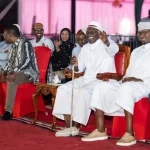


Speaking during the 63rd Madaraka Day celebrations in Wajir County on Monday, Ruto said access to water remains central to unlocking the economic potential of Northern Kenya and other arid and semi-arid regions.
The celebrations, the first national Madaraka Day event to be held in Wajir, were attended by senior government officials, including Irrigation Principal Secretary Ephantus Kimotho and Administration Secretary Yatich Kipkemei.
Ruto said the government is implementing an ambitious water infrastructure programme that includes the construction of 50 mega dams, 200 medium and small dams, and thousands of micro-dam projects across the country.
According to the President, the projects are expected to bring an additional 2.5 million acres under irrigation and support increased food production as well as export-oriented agriculture over the next five to seven years.
“Water means irrigation, food production, industry, resilience and opportunity,” Ruto said, noting that the investments are intended to improve livelihoods while enhancing the country’s capacity to withstand the effects of climate change.
Among the projects highlighted were the Ewaso Nyiro Basin development in Isiolo, the High Grand Falls Dam in Tana River, a proposed dam on River Daua in Mandera, and the long-discussed Bute Dam project in Wajir North. Other planned projects include the Siliki Canal in Garissa, Lowaat Dam in Turkana, Narosura Dam in Narok and Arror Dam in Elgeyo Marakwet.
The President said the projects are part of a broader strategy aimed at expanding water access and supporting agricultural productivity across different regions of the country.
The State Department for Irrigation is expected to play a key role in implementing the planned projects as the government seeks to expand irrigation infrastructure and reduce reliance on rain-fed agriculture.