

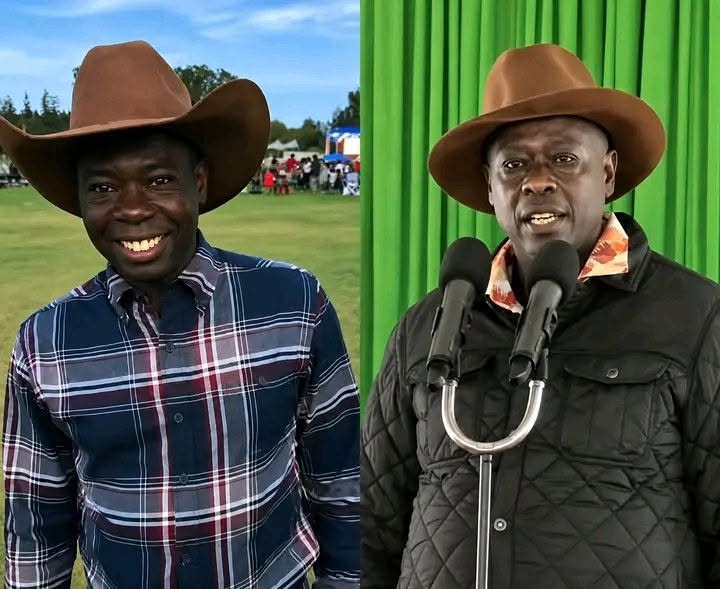
Walking down a street in Nairobi and spotting a stranger who looks exactly like a close relative is a rare experience.
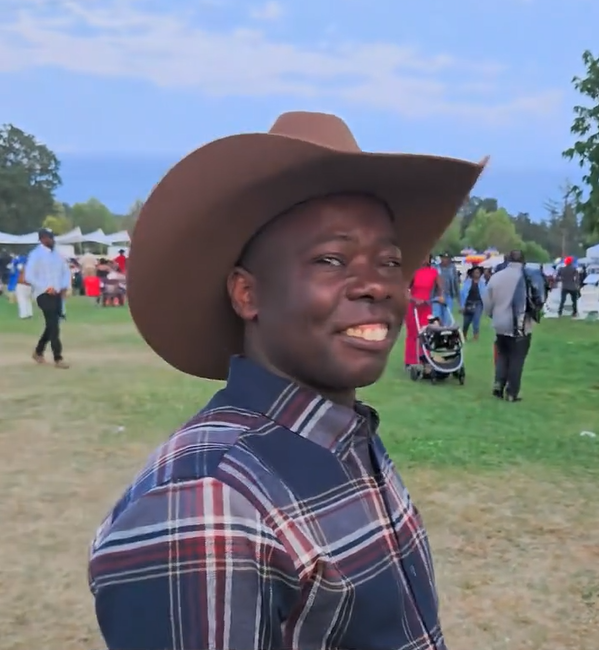
Recently, Kenyans on social media could not hold back laughter after spotting a man bearing a striking resemblance to former Deputy President Rigathi Gachagua.
The man, fondly dubbed “Gachagua mdogo”, left netizens wondering how two people without a shared family tree could look like identical twins, or father and son.
The idea of a doppelgänger has fascinated humanity for centuries. The explanation for this resemblance, however, comes down to genetics and probability.
The genetic lottery
Human DNA is a vast biological instruction manual. However, the specific genes responsible for determining facial features, like the shape of the nose, eyes, chin and mouth, are relatively few.
With a global population of over eight billion people, genetic combinations are bound to repeat. It is similar to shuffling a deck of cards repeatedly; eventually, the exact same hand will appear twice.
Scientists have put this phenomenon under the microscope. In a study published on August 23, 2022, researchers used facial recognition software to analyse 32 pairs of lookalikes who had no biological connection. They sequenced their DNA to establish a molecular reason behind their identical faces.
The results were conclusive. The unrelated lookalikes shared similar genetic variations.
“Our study provides a rare insight into human likeness by showing that people with extreme lookalike faces share common genotypes,” noted Dr Manel Esteller, the senior author of the research published in the peer-reviewed journal, Cell Reports.
Beyond facial features
The science of doppelgängers goes beyond sharing a face. The same study revealed that shared genetic variations influence otherphysical traits like height and weight.
At times, these similarities extend to behavioural habits.
However, researchers found that while the basic DNA codes matched closely, different environments and life experiences set the individuals entirely apart.
The microscopic organisms in their bodies and the way their genes turned on or off due to lifestyle choices were completely different. Therefore, while two lookalikes share the physical blueprint, individual life experiences make them entirely unique.
So the next time a Gachagua lookalike or any other double goes viral, the explanation is clear. The human gene pool simply hit the repeat button.