
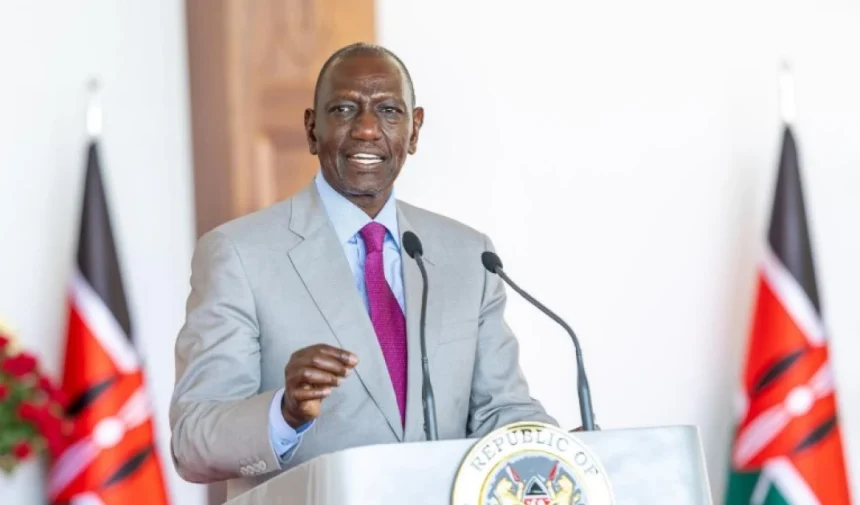
Speaking during a visit of the region, Ruto highlighted education reforms, road construction, stadium development, and a push to resolve long-standing coastal land disputes as evidence of his government’s commitment to the historically marginalized county.
The President announced that 20,000 additional teachers have been hired, with a further recruitment planned before year-end. He defended changes to education funding, saying the revised model ensures resources reach schools efficiently.
“Students should be measured by intellect, not money. Government must manage funds,” Ruto said, framing education as a meritocratic investment rather than a resource drain.
He pointed to 18 billion shillings allocated to third-term funding, countering claims that schools face budget shortfalls. “Funds are already in schools,” Ruto asserted, suggesting some complaints reflect political opportunism rather than genuine scarcity.
Ruto reframed Taita Taveta’s long history of underdevelopment with a pointed message: “Taita Taveta was forgotten for many years. I have said it will not be forgotten again.”
The President outlined a series of road projects now underway, including the Voi-Sagala route and the Taveta-Eldoro corridor, which he said is nearing completion. The Voi-Msau road, previously stalled, is now progressing after the government secured funding and a contractor.
“There is money and a contractor has started work,” Ruto said of the Voi-Sagala route, using it as an example of how his government is unblocking long-delayed initiatives.
Ruto announced construction of a major stadium in Voi as part of a nationwide sports infrastructure programme that includes facilities in Wajir and Nyeri. He brushed aside comparisons to Nairobi’s stadium development with a note that regional equity demands investment beyond the capital.
The government is also building seven new markets across the region, with plans to add three more. Separately, 2,500 youth are benefiting from an affordable housing programme, which Ruto described as a direct response to youth unemployment.
“Some say we are eating affordable housing. But do you think plumbers don’t get paid? These are jobs for people at the bottom,” he said, defending the scheme against criticism.
A significant commitment emerged around rail development. Ruto outlined plans for a rail line linking Tanzania through Voi to Mombasa, with multiple stations planned across the corridor. He emphasized that agricultural produce, particularly from Taveta, must reach markets efficiently.
“Mali must reach the market,” he said, referring to cassava and other regional crops that have historically struggled with export logistics.
The President addressed a contentious coastal issue, committing to resolve longstanding land disputes on the Pwani region. The government has allocated 10 billion shillings to compensate property owners affected by disputed titles, he said.
The administration has processed 45,000 land titles and is working toward distributing approximately half a million more across the coast. “Each person will get their deed of ownership,” Ruto promised.
Machungwa farming disputes and cassava cultivation issues will also be addressed, though he offered fewer specifics on the timeline.
Ruto acknowledged severe drought affecting the region, compounded by elephant encroachment destroying crops. He said he has consulted with the Kenya Wildlife Service to manage the crisis, suggesting a forthcoming policy response, though details remain sparse.
In pointed remarks aimed at opposition figures, Ruto argued that leaders should be judged by their accomplishments, not their ethnic origin. “A leader is not measured by his tribe,” he said.
He criticized opponents as deliberate obstructionists: “These people are agents sent to oppose everything. They have no alternative, then they look for leadership. Such people are not fit to even lead a village.”
Ruto’s tone hardened when addressing what he characterized as tribal mobilization by his critics. “Do not bring hatred and tribal division to me. I have spoken to my people, now you speak yours. Tell your agenda, your policies, and your plans,” he challenged political rivals.
He dismissed accusations of corruption, framing government expenditure as transparent: “Kenya is not changed by rumors and chaos. Let us abandon the politics of the past. We have 12 billion ongoing. Every day we do something.”