
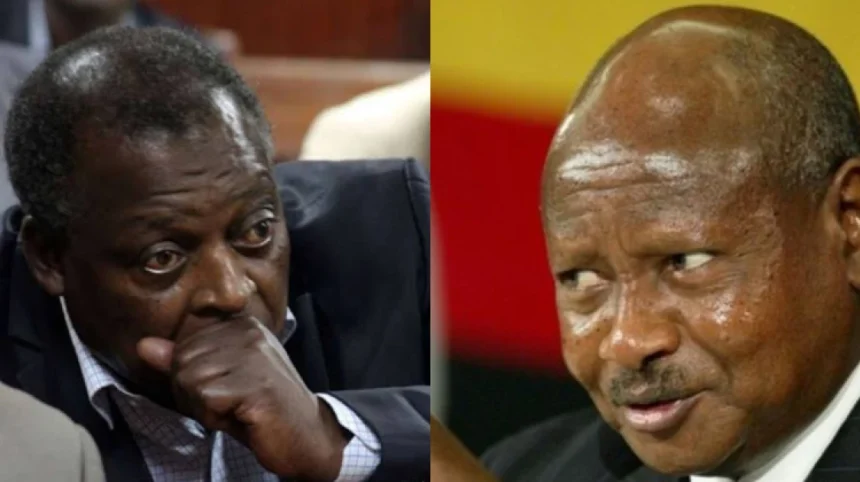
President Museveni had earlier intimated that Jirongo approached him in 2019, revealing the existence of backdoor oil dealings as Uganda procured petroleum products through intermediaries in Kenya, rather than directly from the government as outlined in the G-to-G framework.
“The Republic of Uganda was buying petroleum products through middlemen in Kenya. Can you imagine that? And the person who woke me up first was a senator from Kenya,” he said.
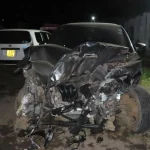
As controversy continued to brew, and the government rushed to make a scattered defence on the matter, Museveni said that he was not aware of Jirongo’s death, who lost his life in December 2025 in a car crash.
“I have just learnt that Senator Cyrus Jirongo passed away last December in a motor accident. I was not aware that he had died,” Museveni said in a statement on Monday.
He mourned the former politician, celebrating him as a patriot who served his nation with zeal.
“This is very sad. Jirongo was a good and patriotic leader who served his country with dedication. We shall miss him. My condolences go to his family, relatives, friends and the people of Kenya. May his soul rest in peace,” Museveni added.
Jirongo served as the Minister for Rural Development from March 12, 2002 to December 27, 2002 and also served as the Member of Parliament for Lugari Constituency (1997-2002 and 2007-2013).
Museveni said Jirongo’s revelation prompted him to end the G-to-G arrangement with Kenya, and begin sourcing bulk petroleum products directly.
He said that Uganda was paying a premium of $118 per metric tonne for diesel under the previous arrangement, compared with $83 under its current arrangement with Vitol and Uganda National Oil Company (UNOC).
Museveni’s recent outburst has since sparked a response from Kenya. The Ministry of Energy, in a statement on Sunday, dismissed allegations of irregularities in the importation and supply of refined petroleum products under the Government-to-Government arrangement.