

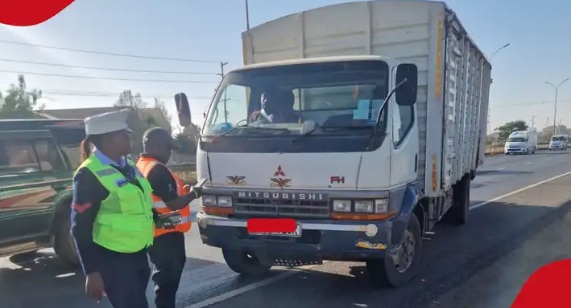
The National Transport and Safety Authority (NTSA) managed to collect only KSh 37 million out of approximately KSh 234 million in instant traffic fines issued during the pilot phase of its automated enforcement programme, leaving KSh 197 million unpaid after courts stepped in to suspend the system.
NTSA Director General Nashon Kondiwa presented these figures to the Senate ICT Committee, confirming that all outstanding fines were recorded before the judicial freeze took effect.
How NTSA’s automated fines system worked
The instant fines programme went live on March 9, 2026, deploying smart cameras to flag traffic violations including speeding, lane infractions, and failure to wear seatbelts.
Once detected, offenders received SMS alerts stating that penalties ranged from KSh 500 to KSh 10,000, scaled according to the severity of the breach.
Motorists had seven days to settle payments at designated KCB bank branches, with interest and a block on NTSA digital services threatened for non-compliance.
Kondiwa was firm in rejecting suggestions that the system was revenue-driven. “Our objective is not to make money but to bring sanity on the roads,” he stated at the time of the launch.
He further clarified that proceeds flow directly to the national government rather than the authority itself.
“These are Exchequer revenues, not NTSA revenue. NTSA’s focus and mandate are road safety,” he said.
Legal challenges derail the rollout
The programme faced immediate legal resistance. On March 12, 2026, just three days after launch, the High Court issued conservatory orders halting the system following a petition arguing that contactless enforcement denied motorists their constitutional right to a fair hearing.
NTSA withdrew its “Go Live” notice on March 27, 2026. Kondiwa told the court the withdrawal was necessary to address procedural gaps and allow for public education.
“There is presently no operational Instant Fines Management System,” he confirmed.
A separate legal challenge came from the Road Safety Association of Kenya, which contested a 21-year public-private partnership between NTSA and Pesa Print Limited.
On May 29, 2026, the Kerugoya High Court suspended that partnership, directly affecting the rollout of both the smart driving licence and the automated fines components.
Kondiwa acknowledged the consequences for expansion plans.
“The PPP rollout, which was to add 1,000 cameras in two years, is suspended. Any existing schedule will have to be adjusted until the court process is complete,” he said.
Despite the suspension, Kondiwa clarified that existing traffic offence rules remain enforceable.
“It is important to note the difference between PPP implementation and the Minor Traffic Offences Rules implementation. They are not the same. No one has suspended the rules,” he noted.