

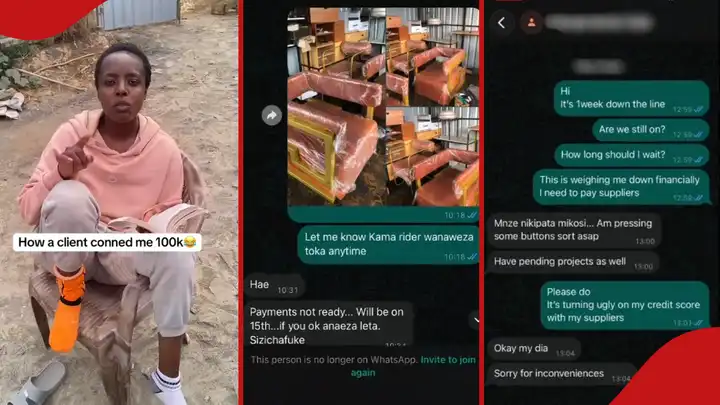
A Kenyan furniture maker known online as Mirnta has gone viral after sharing a TikTok video recounting how she was allegedly swindled out of KSh 100,000 by a client who placed a large order, kept expanding it, then refused to pay when the furniture was finally delivered.
Mirnta narrated the ordeal in a screen-recording clip that shows a lengthy WhatsApp conversation with a contact she saved as “X Design Kitchen Table.”
Client seemed professional and encouraging
The thread includes photos and videos of chairs, dining table sets and sofas shared over several months of communication.
According to Mirnta, the client first reached out while she was in the village with little work on her hands.
The client came across as professional and encouraging, made an initial deposit and they began work on a KSh 100,000 furniture order.
Payments come with fresh demands
Throughout the production process, she kept them updated with progress photos, and they reciprocated by sending reference images of the styles they wanted.
After the first batch was delivered, the client expressed interest in additional chairs. They promised a deposit for the new pieces but was slow to send the money.
When payments did eventually come through, they arrived in portions and were accompanied by fresh demands, including material changes and design adjustments that added to the overall cost.
Two riders dispatched to deliver furniture
Mirnta said she had dipped into funds from another customer’s order just to keep the job moving, determined to complete what she had started.
By the time the full order was ready, two riders were dispatched to deliver the furniture to the client.
Once the riders arrived at the destination, the client reportedly began sending delay messages and offering excuses instead of settling the outstanding balance.
Unclaimed furniture moved to hotel
The furniture was eventually moved to a hotel while the situation dragged on with no resolution in sight.
“Honestly, Jesus Christ!” Mirnta said in the voiceover, her frustration audible.
The clip has since sparked wide conversation among Kenyan small business owners and artisans, many of whom say the experience mirrors their own encounters with clients who disappear or manufacture delays once a job is done.