

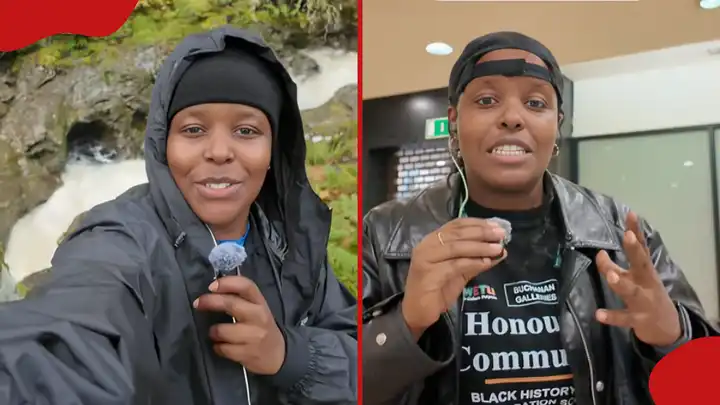
A Kenyan woman named Murugi has sparked widespread interest online after sharing the networking essay that earned her a Chevening Scholarship, reading it aloud on TikTok and breaking down what made it stand out.
Filmed at home with bookshelves visible in the background, Murugi’s video walks viewers through the full essay while pausing to offer candid writing advice, turning what could have been a simple flex into a genuine guide for future applicants.
The essay opens with a striking declaration: that one of the boldest choices she ever made was pursuing an LGBT-focused final year project at a conservative institution in Kenya.
Murugi secures interviews with lead psychologist, lawyer
Her supervisors warned her off the topic, raising concerns about sample availability and whether it conflicted with the school’s values, but she pressed on regardless.
Working through partnerships with LGBT organisations she approached via Instagram, Murugi secured interviews with a lead psychologist and a lawyer, then circulated a survey that attracted 50 responses within weeks — 25% more than her target.
The dissertation went on to win a best dissertation award, earned recognition from her dean, and was later presented at an international psychology conference.
Murugi organises one of Kenya’s largest pride festivals
The relationships she built during that research phase opened further doors.
One of the organisations she had worked with invited her onto the team organising one of Kenya’s largest pride festivals in 2022, where she led the digital communications effort and grew the event’s Instagram following to 1,000 in a single month.
Another organisation brought her in to provide psychosocial support to LGBT youth in an underprivileged community through individual and group therapy sessions.
Murugi shares two pieces of advice Her essay also referenced her current role at Overcoming KE, where she described creating a safe space for over 2,000 people seeking help, reaching more than 5,000 people in person and over 1 million viewers across social media.
She added that she had built and maintained relationships with 16 religious, educational, community and media institutions.
After finishing the reading, Murugi offered two pieces of advice she says made the essay work.
Importance of quantifying achievements
First, she stressed the importance of quantifying achievements. “Don’t just say I helped many people.
Give me numbers. Even if it’s five people, give me numbers,” she said. Her second tip centred on the opening line.
She pointed to her own first sentence as a model of how to draw a reader in immediately, comparing the effect to the first few seconds of a TikTok video.
“Don’t define what networking is. Show it. Don’t tell them, show it,” she said.