

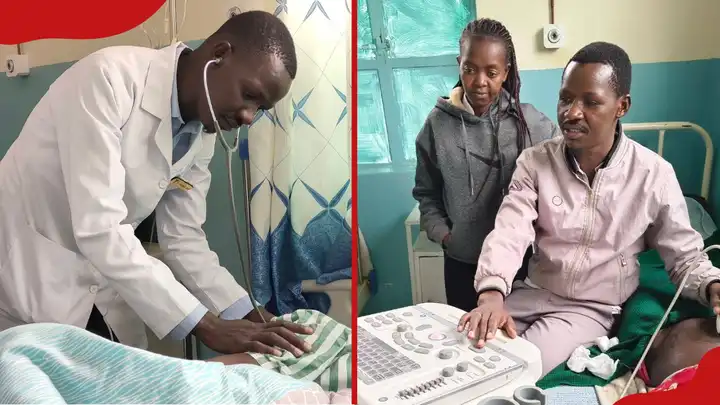
A routine delivery at Kabartonjo Sub-County Hospital in Baringo took a dramatic turn when a medical team discovered a second baby after already delivering the first, with no prior indication that twins were involved.
The mother arrived at the facility at around 7:00 PM, already seven centimetres dilated and in active labour.
Moment Everything Changed Antenatal scans had indicated a single pregnancy. The only unusual sign at handover was a foetal heart rate that was difficult to define clearly.
Staff kept her under close observation through the night, and just after 10 pm, the first baby arrived safely.
The team was about to administer carbetocin, a drug used to prevent excessive bleeding after birth, when one member paused and palpated the uterus once more.
What they felt stopped them cold: the womb was still bulky. A second baby was inside, undetected and presenting in a breech position.
“Had we given the uterotonic, the second baby could have been in danger. Checking first saved the day,” wrote Jack Kemboi, one of the medical staff who shared the account.
Two Babies, Two Placentas, One Night
The team moved quickly. Rather than intervene aggressively, they allowed the mother’s own contractions to drive progress, stepping in only to free a cord that had wrapped around the baby’s lower limbs.
Using the Løvset manoeuvre, a technique used in breech deliveries to free the shoulders and arms, they guided the second baby into the world safely.
Following both births, the team completed active management of the third stage of labour, administering carbetocin and applying controlled cord traction to deliver both placental discs.
Examination confirmed each placenta had its own cord insertion with a dividing membrane between them, consistent with a twin pregnancy that had gone undiagnosed throughout the antenatal period.
Both mother and babies were reported to be in good condition after the delivery. Kemboi shared the experience as a teaching moment for fellow healthcare workers.
“Never assume a delivery is complete until you have confirmed it. Sometimes, one more assessment makes all the difference,” he wrote in the post.
The case highlights the critical importance of thorough post-delivery checks, particularly in settings where advanced imaging may not always be available or conclusive.