

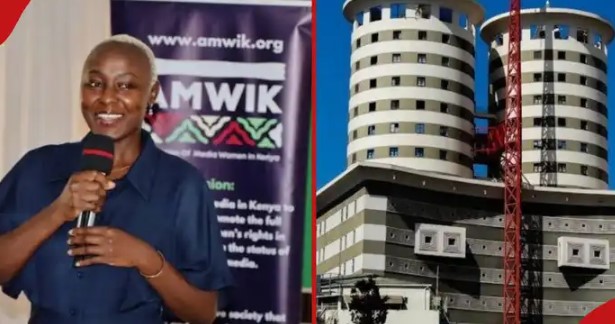
The Association of Media Women in Kenya (AMWIK) has publicly challenged Nation Media Group (NMG) to do more to advance women into top editorial positions, following the media house’s announcement of sweeping changes to its leadership structure.
In a press release dated September 17, 2026, AMWIK acknowledged NMG’s standing as one of the most influential media institutions in East Africa and praised its history of nurturing women journalists.
The organisation cited trailblazers including Pamella Sittoni, Wayua Muli, Catherine Gicheru, Dorothy Kweyu and Lucy Oriang as women who broke barriers within NMG and opened doors for the generation that followed.
It also commended NMG’s Gender Desk for its sustained focus on issues affecting women and marginalised communities.
Why Gender Gaps at the Top Matter
Despite that legacy, AMWIK said the latest editorial changes revealed a troubling pattern of underrepresentation that continues to define Kenyan media leadership. The concern, the association stressed, goes well beyond optics. Who occupies roles such as Managing Editor, Executive Editor, or Head of Content directly influences which stories are commissioned, how those stories are told, and whose experiences shape national conversations.
The numbers tell a sobering story. Nationally, women hold only 3.7% of Managing Editor positions and just 2.8% of media ownership roles, even as they make up more than 40% of the overall media workforce.
Data from the Global Media Monitoring Project shows that women account for only 22% to 23% of news sources and subjects in African media, and are quoted as subject-matter experts just 21% of the time.
AMWIK’s own State of Women in Media in Kenya report for 2026 highlights what it describes as a retention crisis at the mid-career stage. A significant proportion of women leave newsrooms around the age of 35, a trend that results in only 7.4% of women remaining in the profession beyond age 45.
The association was clear that this drain is not a reflection of a skills shortage. Through mentorship, capacity-building and leadership development programmes, AMWIK and its partners have consistently prepared women for senior editorial and governance roles.
What AMWIK Is Asking NMG to Do
While respecting NMG’s right to manage its internal operations as a private business, AMWIK argued that an institution of its scale carries a public interest responsibility that cannot be separated from its editorial decisions.
The association called on NMG and other regional media organisations to build deliberate leadership pipelines that fast-track qualified women into decision-making positions and to tackle mid-career retention before experienced female talent is lost entirely.
AMWIK, established in 1982 and registered as a non-profit under the Societies Act, said it remains willing to work alongside NMG to develop practical strategies that would improve and sustain the presence of women in key editorial roles across the industry.