


Media personality and gender equality advocate Janet Mbugua has challenged the government to strengthen efforts to protect girls, questioning why issues such as child abuse, early pregnancies and limited access to education continue despite years of advocacy.
In a post shared on Sunday, October 11, 2026, to mark the International Day of the Girl Child, Mbugua reflected on the challenges affecting girls, linking their vulnerability to poverty, climate change and inadequate government intervention.
She expressed concern over reports of a 10-year-old girl who was married off to a 69-year-old man, questioning what authorities were doing to address such cases.
“I don’t like that we call it child marriage. Can we? There’s nothing like child marriage. Child abuse in the form of marriage,” Mbugua said, arguing that the terminology should reflect the seriousness of the abuse.
Mbugua questions government commitment
Drawing from more than a decade of work in gender equality and reproductive health, Mbugua questioned why girls continue to experience challenges similar to those faced by previous generations.
She pointed to poverty, limited educational opportunities and inadequate reproductive health services as persistent concerns, despite the work of organisations supporting girls and women.
“Where is the gap? Wacha tuonge true kweli. Is the gap gatekeeping? Is the gap doing the same things and expecting different results? Is the gap government?” she asked.
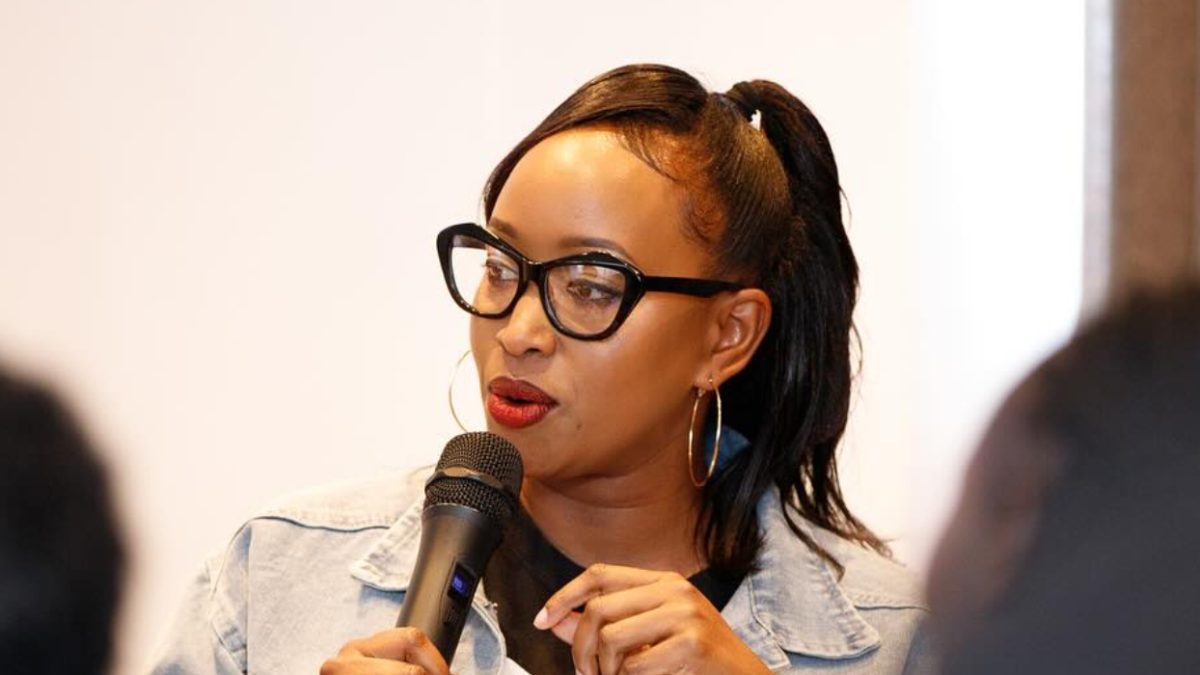
Mbugua argued that government commitment is essential to addressing social problems, noting that non-governmental organisations and private companies cannot shoulder the responsibility alone.
She also recalled her advocacy through Inua Dada, saying activists were once accused of lying when they raised concerns about girls using unsuitable materials as menstrual pads.
Climate change worsens girls’ vulnerability
Mbugua also linked climate-related disasters to the risks facing girls, explaining that floods and droughts can destroy homes, disrupt education and leave families struggling financially.
“When their parents or their family’s goods have been swept away, so they’re starting from scratch,” she said, describing the difficulties families face after climate disasters.
She warned that girls who remain at home because of disrupted schooling and financial hardship may face increased exposure to predators and early marriage.

Girls must be part of solutions
Mbugua called for better coordination among organisations and greater involvement of young people in developing programmes that address their needs.
She argued that girls should help shape solutions rather than simply participate in initiatives designed by others.
Her message has highlighted the need for stronger government accountability, community involvement and sustained investment in education, reproductive health and child protection to safeguard girls’ futures.