

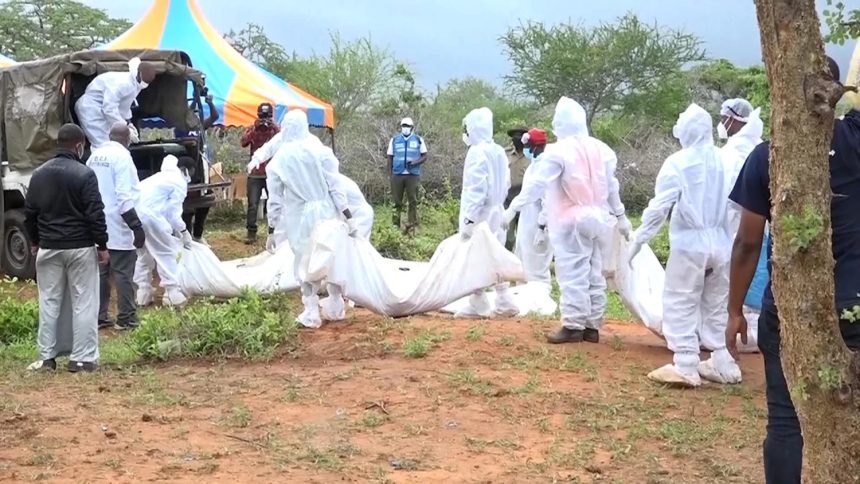
The High Court at Mombasa, before Justice Diana Kavedza, has started to deliver a verdict in a mass murder case involving doomsday preacher Paul Mackenzie.
Mackenzie and 29 of his followers are being charged with the murder of 191 people, all but one of them children.
His cult is alleged to have forced children to starve to death so that they could “meet Jesus”. His doomsday doctrine said that education was forbidden and modern medicine was considered “evil”.
Mackenzie and the 29 others have all pleaded not guilty to murder, repeatedly insisting that nobody was forced to die.
1. Members are discouraged from questioning the leader
Religious leaders can provide guidance, but concern arises when followers are expected to obey every instruction without asking questions.
A leader who presents personal opinions as unquestionable divine commands may use faith to discourage independent thinking. Members who raise concerns may be labelled disobedient, unfaithful or enemies of the group.
In the Shakahola case, court testimony reported by the Directorate of Criminal Investigations described instructions attributed to Mackenzie, including extreme fasting and restrictions on children’s education.
A warning sign is not simply a leader having strong beliefs. It is the use of authority to silence questions, punish disagreement or demand obedience even when instructions threaten people’s safety.
2. Members are encouraged to cut ties with family and friends
Supportive religious communities can offer companionship and a sense of belonging. However, a group becomes concerning when members are pressured to abandon relationships with relatives and friends who question its teachings.
Isolation can leave people with fewer opportunities to hear different opinions or seek help when they experience mistreatment. It may also make them increasingly dependent on the group for emotional and practical support.
Families should pay attention when a loved one suddenly stops communicating with them because they have been told that outsiders are dangerous, spiritually inferior or unworthy of trust.
Although disagreements between families and religious groups can occur, persistent pressure to isolate members from everyone outside the group deserves attention, particularly when it is accompanied by threats or coercion.

3. Members are told to reject medical care or education
One of the most serious warning signs is when a religious leader instructs followers to abandon essential services in the name of faith.
This may include discouraging children from attending school, preventing sick members from seeking medical treatment or presenting necessary healthcare as a sign of weak belief.
During the Shakahola case hearings, the Directorate of Criminal Investigations reported witness testimony that followers were instructed to withdraw children from school and that people who fell ill were not allowed to seek medical treatment.
Religious beliefs and medical care do not have to be in conflict. However, when a group prevents people from accessing treatment or denies children their education, the consequences can be serious.
Parents and caregivers should be particularly concerned when children are exposed to practices that threaten their health, safety or development.
4. Fear, guilt and threats are used to enforce obedience
Manipulation does not always begin with direct threats. It can develop gradually through messages that make people afraid to question a leader or leave a group.
Members may be told that leaving will bring divine punishment, that their families will suffer or that questioning instructions will lead to spiritual rejection.
Such messages can make people feel trapped, even when they are uncomfortable with what is happening.
A dangerous pattern emerges when fear and guilt are repeatedly used to prevent members from making independent decisions, seeking outside help or reporting abuse.
Healthy religious guidance should not require people to surrender their safety or accept threats to prove their faith.
5. Members are pressured into dangerous practices
The clearest warning sign is when religious instructions place people’s lives or physical wellbeing at risk.
This may involve extreme fasting, dangerous rituals, withholding food or water, physical punishment or being ordered to ignore serious medical symptoms.
People should take immediate action when a religious practice puts a child or another vulnerable person in danger. Concerns about abuse, forced deprivation of food or water, or threats to life should be reported to the relevant authorities rather than dismissed as private religious matters.