

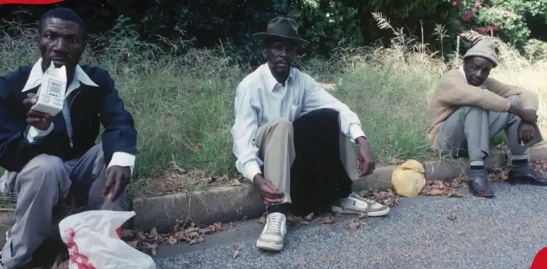
Nearly half of South Africa’s young job seekers are without work, according to figures released by Statistics South Africa (Stats SA), painting a bleak picture of the country’s labour market as the second quarter of the year came to a close.
The Quarterly Labour Force Survey for the second quarter of 2026 placed the youth unemployment rate at 47.4%, with 5 million people aged 15 to 34 unable to find employment between April and June.
South Africa’s Broader Unemployment Crisis
That figure represents an increase of 264,000 from the first quarter. Youth employment also fell by 40,000 to 5.6 million during the same period, pushing the youth unemployment rate up by 1.5%.
Mail and Guardian report that the situation among young people reflects a wider deterioration across the labour market.
The country’s overall unemployment rate climbed from 32.7% in the first quarter to 33.6% in the second quarter, with the number of unemployed people rising by 345 000 to 8.5 million.
The number of employed people declined by 16,000 to 16.7 million, even as 329,000 more people entered the labour force in search of work.
South Africa’s broader labour underutilisation measure, known as LU4, held at 46.3%, capturing not only the unemployed but also people working fewer hours than they need and those only partially connected to the job market.
The LU3 measure, which combines unemployment and the potential labour force, edged up slightly from 43.7% to 43.8%.
The gender gap within these figures is stark: LU3 stood at 48.6% among women compared with 39.4% among men, while among Black African women the rate reached 53.1%.
Across industries, the Trade sector recorded the largest employment gain at 70 000 jobs, followed by Construction with 39 000 and Finance with 11 000.
SAFTU Demands Urgent Collective Action
However, those gains were offset by losses in Community and social services (down 57 000), Mining (down 26,000) and both Agriculture and Manufacturing (down 15,000 each).
Formal-sector employment fell by 41,000 during the quarter, while informal-sector employment grew by 34,000.
The South African Federation of Trade Unions (SAFTU) responded sharply to the figures, cautioning that the country must not grow comfortable treating high unemployment as routine.
“These are not merely statistics. Behind every number is a human being,” the federation said, pointing to households that depend on social grants, informal income or a single employed family member to survive.
SAFTU was particularly critical of responses that push young people towards entrepreneurship while productive sectors continue to shed jobs.
“Young people do not need endless lectures about entrepreneurship while productive sectors are shrinking. They need jobs,” the federation said.
It also flagged the decline in manufacturing, mining and agriculture as evidence of more serious structural damage:
“Factories have closed. Productive capacity has been hollowed out. Industrial supply chains have weakened. Import dependence has increased.”
The federation called for a Trade Union Summit followed by a broader Working-Class Summit to develop a coordinated response to unemployment and retrenchments.