

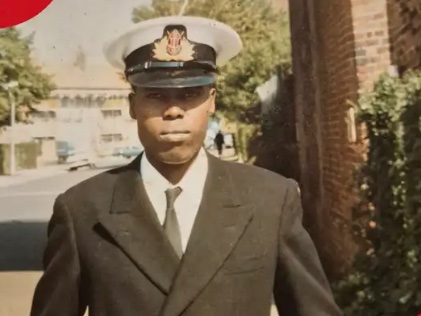
For most people, a first rejection is enough to redirect their ambitions elsewhere. For Haron Rotich, it took four failed attempts and nearly six years before the door to Kenya’s Armed Forces finally opened.
Rotich’s pursuit of a military career began in April 1979, but that first effort came to nothing. Rather than dwelling on the setback, he enrolled at Shanzu Teachers College, completed his training by March 1981 and was absorbed into the Teachers Service Commission.
Deputy Headmaster With Unfinished Business
He had already been working as an untrained teacher since October 1978, so the classroom was familiar ground.
By 1983, Rotich had risen to deputy headmaster at Tibingar Primary School, a respectable milestone by any measure. Yet the pull of the military remained.
He applied to become a cadet officer, but was turned away again. A suggestion that he consider joining the 82 Air Force as a technician following the attempted coup did not appeal to him, and so he returned to teaching.
His former classmate Stephen Boiwo, who later became Colonel Boiwo, was among those who succeeded in the same period.
The most painful rejection came in April 1984 in Kabarnet. After surviving nearly the entire selection process, Rotich found himself among just two finalists competing for a single cadet position.
The recruiting officer asked both men to produce their O-level certificates so that their Mathematics grades could be compared.
His competitor, Zachary Chebii, later Colonel Chebii, had the stronger grade. Chebii was chosen. Rotich was sent home.
Because recruitment ran once a year, Rotich feared that by the time the next cycle came around in 1985, he would be too old to qualify.
Second Recruitment Exercise Changes Everything
A recruiting officer suggested he consider enlisting as a serviceman and later seeking a commission, but Rotich was uncertain what that path would involve and declined.
Then, in September or October 1984, something Rotich would later describe as a “surprise” and a “lifeline” arrived: a second recruitment exercise was announced for that year.
He rushed to retrieve his documents from home in Timboroa while he was stationed in North Baringo and made his way back to Kabarnet.
This time, he topped the run from the field to Kasoiyo and back, clearing the physical test with confidence.
As candidates narrowed from 91 to a final group at Kabarnet High School, Rotich once again held his position.
When the time came to choose a service, the Army slot went to another candidate, Toroitich, who called it out first. The Air Force went to Sigilai.
That left Rotich with the Navy, a somewhat ironic outcome given that a senior officer, then Captain Mwathethe, later a General, had once invited him to consider the Navy and been turned down.
Rotich accepted. He was given a reporting date for the Armed Forces Training College in Nakuru. After a further two-week interview, he was confirmed among 60 recruits selected from the original 91 candidates.
He trained in Nakuru for six months before travelling to Britain with three other Navy cadet officers for a year at the Britannia Royal Naval College. In 1986, he was commissioned as a Second Lieutenant.
What followed was a military career spanning 24 years, built on the foundation of a dream that survived four rejections.