

US President Donald Trump has invoked the Defense Production Act to compel defense companies to increase weapon manufacturing after the recent war with Iran depleted critical American stockpiles.
In a presidential determination signed last week, Trump declared that “conditions exist which may pose a direct threat to the national defense or its preparedness programs.”
“In particular, systemic constraints in the munitions industrial base, including limited production capacity, fragile supply chains, long-lead dependencies, and related production bottlenecks, may impair the ability of the United States to produce, sustain, and expand the availability of munitions, missiles, and equipment required for the national defense,” the document, sent to Defense Secretary Pete Hegseth, states.
The intervention suggests a substantial level of concern within the administration regarding the Pentagon’s weapons reserves following the war with Iran, alongside concurrent security assistances to Israel and Ukraine. The Pentagon has long harbored concerns about the defense industry’s turnaround speed—an issue exacerbated by the heavy expenditure of key missile stockpiles during the regional conflict.
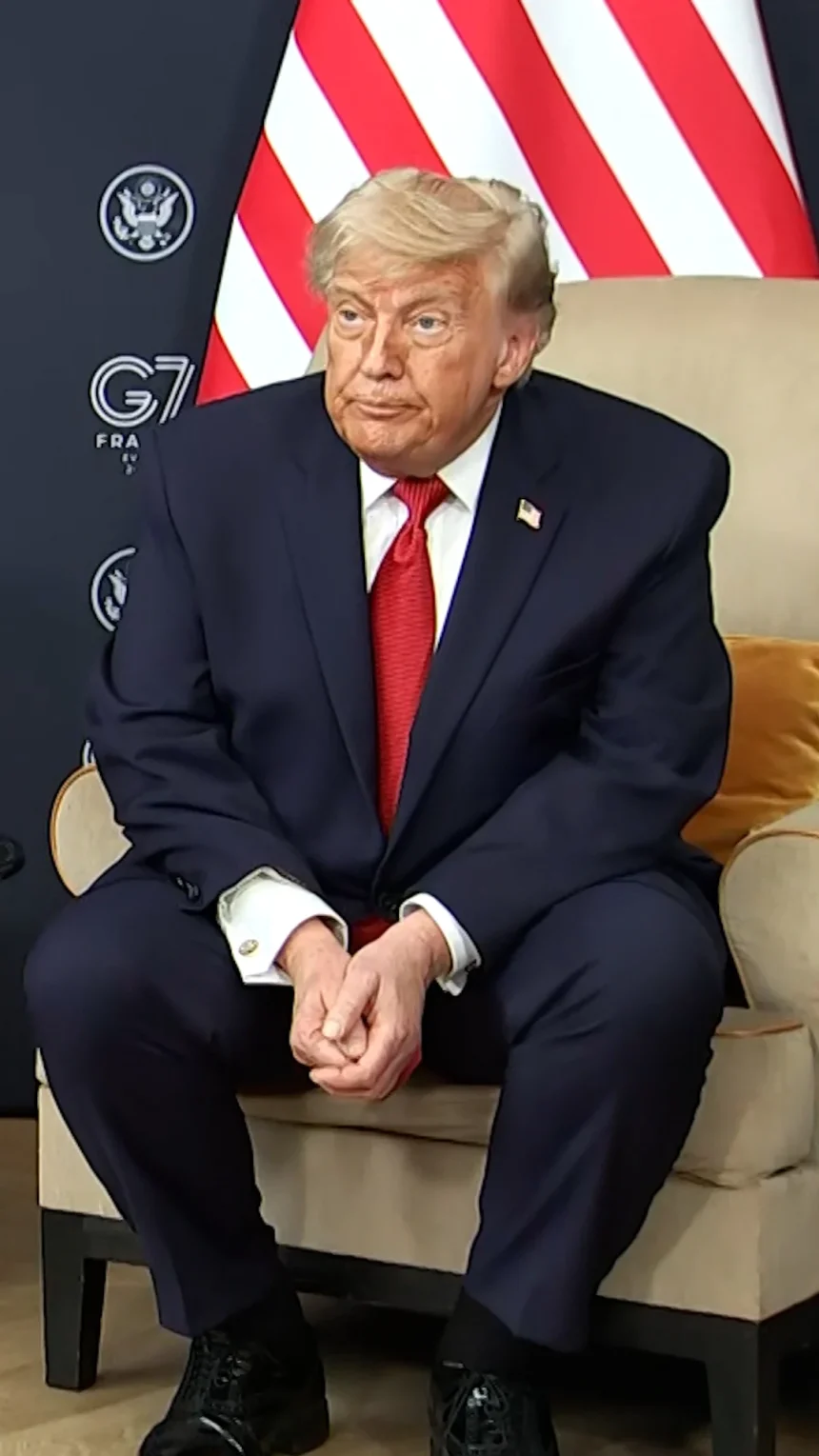
Speaking from the G7 summit in France on Wednesday, Trump noted that the final days of the war were “brutal” and that “$200 million worth of bombs” were used, adding, “It is expensive too, by the way, aside from everything else.”
While Hegseth and other Pentagon officials publicly maintained throughout the conflict that the US retained sufficient readiness to manage multiple global fronts, munition levels have been a significant private concern. A recent analysis by the Center for Strategic and International Studies (CSIS) found that the US expended at least 45 percent of its Precision Strike Missile stockpile, and roughly half of its stockpiles of Patriot air defense interceptor missiles and THAAD missiles.
Despite these findings, Hegseth downplayed the inventory strain during an appearance on CBS News’ Face the Nation, stating that there was no crisis and characterizing the stockpile shortage as “a manufactured story.”
The Defense Production Act (DPA), a 1950s-era law, grants the executive branch broad authority to expedite and expand the supply of resources from the domestic industrial base to support national security. The act allows the government to force companies to prioritize military contracts, create financial incentives for critical material production, and form unique agreements with private firms.
Trump’s June 11 order instructs Hegseth to utilize the DPA to “provide for the making of voluntary agreements and plans of action to help provide for the national defense,” which includes the establishment of a specialized industrial advisory committee.
Prior to the outbreak of hostilities, Chairman of the Joint Chiefs of Staff Gen. Dan Caine had warned that a prolonged military campaign against Iran would heavily impact US ammunition reserves.
Defense analysts note that the high rate of munition expenditures has created a temporary window of increased vulnerability in other theaters, such as the Western Pacific. Experts estimate it will take between one to four years to replenish current inventories, and several additional years to expand them to optimal strategic levels.