

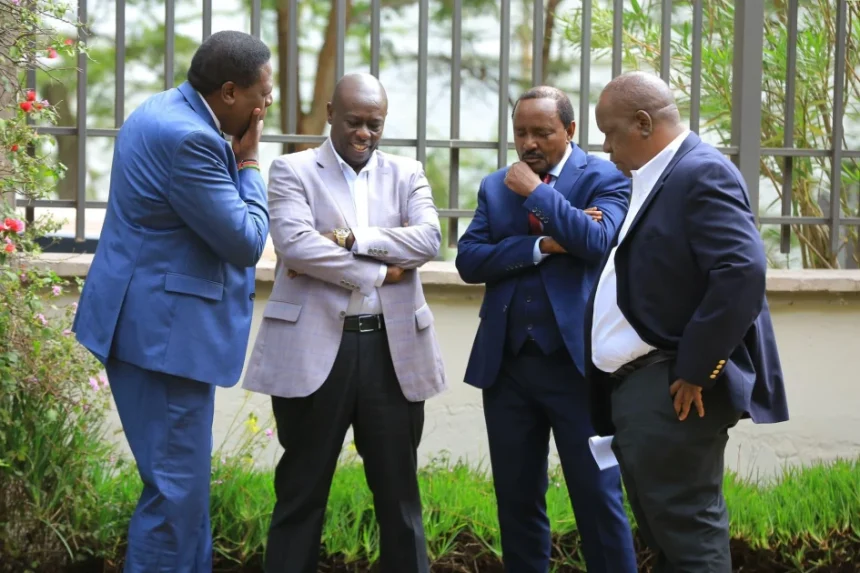
A crowded field of presidential hopefuls, each with compelling credentials and debilitating liabilities, is testing whether the coalition can subordinate personal ambition to the singular goal of unseating President William Ruto.
It is a peculiarly Kenyan political theatre. A coalition that agrees on almost everything – that Ruto must go, that the economy is broken, that the Gen Z uprising of 2024 opened a new chapter, that the country’s governance score is pathetic – cannot agree on the one thing that will determine whether any of that conviction translates into power: one name on the presidential ballot.
The United Opposition, the broad anti-Ruto front that has absorbed former Kenya Kwanza insiders, Azimio remnants, civil society avatars, former technocrats and breakaway ODM rebels, enters the final stretch before 2027 nominations without a flagbearer.
In its place are several distinct centres of gravity, each exerting a pull, each threatening the structural integrity of the whole.
Gachagua: Dismissed DP refuses to go into oblivion
Few figures in Kenyan politics have engineered a more dramatic rehabilitation than Rigathi Gachagua. Impeached from the Deputy Presidency in late 2024 in what he has consistently characterised as a political assassination orchestrated by President Ruto.
Gachagua then pivoted from victim to kingmaker with remarkable speed. He returned to his Mt Kenya “Murima” backyard, recast himself as the region’s Kingpin, its supreme defender and positioned himself as the opposition’s most potent mobiliser in the “Mountain”.
All this notwithstanding, he recently suffered a remarkable setback when the High Court upheld his impeachment and possibly put an obstacle to his lofty goals.
Yet for all his silver-tongued oratory and capacity to make President Ruto visibly uncomfortable, Gachagua has been on a secluded 45-day consultation process at his Wamunyoro residence aimed at determining not whether he should be president, but who should be.
Reports swirling through the opposition’s corridors this past week suggest that his preference has settled on Wiper Patriotic Front leader Kalonzo Musyoka, a development that has sent shockwaves through the coalition’s more ambitious wings.
His own national poll numbers tell the story of a regional, not national, phenomenon. In the Infotrak survey conducted in December 2025 across all 47 counties, Gachagua polled only 5 per cent nationally, a figure that, while meaningful, fell far short of a presidential threshold.
Gachagua’s strategic retreat from a presidential bid of his own, if confirmed, would be the most consequential single act in opposition politics since Raila Odinga’s exit from the scene.
It would hand Kalonzo a powerful regional endorsement and potentially consolidate the Mt Kenya vote around an opposition ticket for the first time since 2002.
But it would also leave several other aspirants, Fred Matiang’i, Martha Karua, Edwin Sifuna, David Maraga, among other probable presidential aspirants, scrambling to recalibrate their own strategies.
Kalonzo: The Enduring Perennial Contender
Stephen Kalonzo Musyoka has contested, negotiated, deferred, and endured through every major Kenyan presidential cycle since 1992.
He is, in the words of one political analyst, “everyone’s second choice if the first is not available.” That is both his greatest strength and his most enduring setback.
In the December 2025 Infotrak poll, he garnered 12 per cent nationally, third behind Ruto’s 28 per cent and Matiang’i’s 13 per cent, but ahead of the rest of the field. He leads in Eastern Kenya, polling at 20 per cent against Ruto’s 17 per cent in the region.
His Wiper Patriotic Front commands the loyalty of the Kamba bloc, and his reputation as a consensus builder, amiable, unthreatening, willing to deal, makes him the coalition’s natural centre of gravity.
The TIFA poll of May 2026 confirmed this advantage with a statistically significant finding: The Kalonzo-Sifuna ticket led opposition-supporter preferences at 28 per cent, while even the Kalonzo-Gachagua pairing came second at 25 per cent.
The common thread in every leading combination was not Sifuna, not Matiang’i, not Gachagua; it was Kalonzo. One thread runs clearly through the data: his name appears in every top-performing ticket, pointing to his continued standing as the figure other leaders must negotiate with, rather than around.
His vulnerability, however, lies not in his numbers but in his narrative. Kalonzo has been in local electoral history in 2007, 2013, 2017, and 2022.
He carries the weight of the perennial bridesmaid, the man perpetually positioned for a turn that never fully arrives. In 2022, he deferred to Raila. Should he fail to secure the opposition flag this cycle, political analysts warn that his window may close.
His more immediate challenge is the emerging Sifuna camp, whose leaders make no secret of their view that recycling familiar faces will not inspire the millions of new voters, overwhelmingly young, overwhelmingly disenchanted, all gearing up for 2027.
Matiang’i: The technocrat with an impeccable delivery record, haunted by acts of the past regime
Fred Matiang’i returned to Kenya in April 2025, and his credentials are formidable. As Cabinet Secretary across multiple ministries under President Uhuru Kenyatta, he oversaw what many regard as the most efficient period of public service delivery in recent memory.
Championed examination reforms that restored credibility to the KCSE, a security apparatus that brought notorious criminal gangs to heel, and a disciplined management of the national health insurance framework. His supporters compare his style to the late Mwai Kibaki: “he does not talk too much; he works.”
Polling reflects this appeal. The April 2026 Stats Kenya survey placed him second nationally at 12.3 per cent, and the Infotrak poll gave him 13 per cent, making him Ruto’s closest national rival in several surveys.
Yet the past does not release its grip so easily in Kenyan politics. Critics, most notably lawyer Miguna Miguna, have accused Matiang’i of presiding over abductions, forceful deportations executed in defiance of court orders, and security operations linked to extrajudicial deaths.
On several occasions, Matiangi himself has denied any wrongdoing and challenged his accusers to table any personal link he had to these unfortunate events.
Additionally, his backing by former President Uhuru Kenyatta, the same political machine that lost in 2022, has prompted sceptics to ask whether old alliances will translate into new votes.
Still, his defenders argue that in a field crowded with politicians, he alone offers the credibility of a technocrat.
“He comes with less baggage; he comes with an excellent track record of performance,” Morara Kebaso argued this week, warning that Matiang’i may run independently if sidelined by a Kalonzo-Sifuna ticket; a move that could spoil the opposition coalition’s arithmetic and inadvertently rescue Ruto.
Maraga: Moral authority in search of a machine
David Maraga declared his presidential bid under the United Green Movement Party in October 2025, presenting himself as the conscience of the nation, the jurist who had the fortitude to nullify a presidential election in 2017 and the integrity to resist political pressure throughout his tenure as Chief Justice.
Although his appeal is real, his support base is thin. He polled at just 2 per cent in the December 2025 Infotrak survey, a number that has not meaningfully shifted since.
His supporters argue that name recognition and ground organisation will follow once the campaign intensifies; his detractors counter that moral authority without political machinery is, in Kenyan elections, a recipe for noble irrelevance.
The party intrigues around him have not helped. Saboti MP Caleb Amisi captured the mood of those around Maraga when he declared: “They should all come and support people like Maraga. We can’t keep on doing the same things the same way and expect different results.”
Yet Amisi himself later appeared on the same rally platforms as Kalonzo and Gachagua, the very establishment figures his statement implicitly criticised
The contradiction is instructive: Maraga’s appeal as a fresh face is real, but even his own allies cannot fully disentangle themselves from the old political gravity.
Sifuna: The disruption that has created a whirlwind
Of all the developments reshaping the opposition’s calculus in 2026, none has been more startling than the emergence of Nairobi Senator Edwin Sifuna as a presidential contender.
A year ago, Sifuna was primarily known as a combative ODM official, an effective street-level mobiliser. Fast forward to 2026, the firebrand Senator has emerged as a leader of the Linda Mwananchi movement, an ODM splinter group.
Today, he is the subject of a Luhya political declaration, a central negotiating variable in opposition unity talks, and, according to the TIFA May 2026 poll, the most popular running-mate choice in opposition-supporter preferences.
The story of his rise is inseparable from the post-Raila vacuum in Nyanza and Western Kenya politics.
With ODM entering a broad-based arrangement with President Ruto following the 2024 Gen Z protests, a significant portion of the party’s grassroots constituency felt orphaned.
Sifuna, alongside Siaya Governor James Orengo and Embakasi East MP Babu Owino, positioned their Linda Mwananchi movement explicitly as the rescue operation for ODM’s soul, and the response from the youth demographic, in particular, has been extraordinary.
There are reports that he is preparing a mass exit from ODM, with Luhya leaders who met under Trans Nzoia Governor George Natembeya resolving to front him as their presidential candidate and scheduling major rallies in Trans Nzoia and Bungoma for July 25 and 26.
The move is designed to give him a Western Kenya regional base, something he has lacked, and free him from ongoing ODM internal disputes.
His camp has planned an aggressive nationwide campaign covering at least 24 counties before a major Nairobi declaration in September.
Sifuna’s political intelligence lies partly in his deliberate ambiguity. He has not explicitly declared a presidential candidacy.
He has not confirmed he will accept the running-mate slot either. By keeping all doors open, he has maximized his leverage in every coalition negotiation.
The United Opposition needs him to unify the Luo Nyanza and western Kenya base. Kalonzo needs him to attract the youth vote.
The Linda Mwananchi movement needs a top-ticket position to justify the sacrifices its constituents are making.
His limitations are equally apparent. He lacks executive experience, commands no regional government machinery, and his transition from party operative to national presidential figure is still being road-tested.
Against an incumbent’s war machine with vast resources and a Kalonzo with a consolidated regional bloc, the question is whether eloquence and youth energy alone can build a winning national coalition.
Martha Karua: The Treacherous Path to Opposition Ticket
As Kenya’s opposition undergoes a massive structural realignment ahead of the next electoral cycle, the “Iron Lady”, Martha Karua has drawn a firm line in the political sand.
The PLP leader recently reaffirmed her intention to seek the unified opposition’s presidential ticket, explicitly ruling out another run as a deputy presidential candidate.
While Karua’s “Iron Lady” brand, anti-corruption crusade, and unyielding principles remain highly respected, her path to securing the top spot on the opposition ticket is increasingly uphill.
A look at the shifting political chessboard reveals the major dynamics shaping her chances.
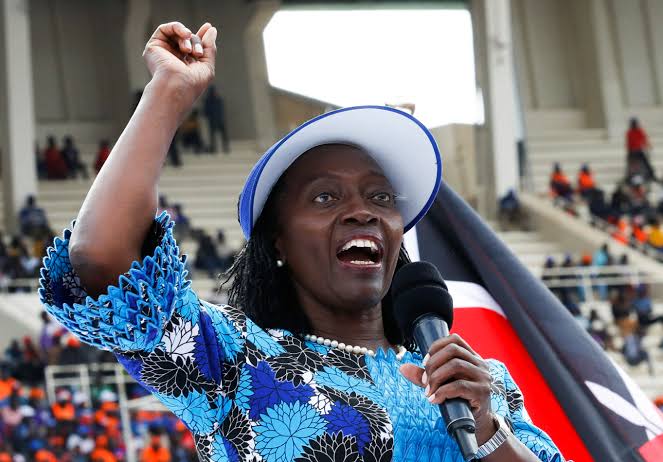
Karua’s primary asset is her consistency. Her fierce opposition to the current administration’s economic policies, such as the Social Health Authority (SHA) rollout and the controversial housing levy, resonates strongly with a public grappling with high taxation and socioeconomic grievances.
Furthermore, her steadfast refusal to compromise or enter “broad-based” government deals with President William Ruto has preserved her ideological purity.
Karua stands out as a clear, uncompromised anti-government voice, which gives her substantial leverage among urban youth, civil society, and voters looking for an alternative to standard backroom political deal-making.
Despite her high profile, Karua faces structural and regional hurdles that severely complicate her path to the top ticket. The Mount Kenya vote split is probably the biggest factor to be avoided by her corner.
Karua must compete not just with Gachagua’s deep grassroots machinery, but also with other regional heavyweights, diluting her ability to claim undisputed leadership of the region.
Karua will also have to deal with the Kalonzo factor as the Wiper leader has emerged as a formidable, well-entrenched frontrunner within the developing opposition frameworks (such as the proposed “Komboa Kenya Alliance”).
Backed by a fiercely loyal Ukambani base, Musyoka commands a reliable regional arithmetic that Karua’s lean PLP apparatus would struggle to match.
Ultimately, Martha Karua’s chances of clinching the primary opposition presidential ticket remain slim but highly influential.
Kenya’s electoral system is fundamentally driven by ethno-regional coalition arithmetic. Because Karua does not currently command a locked-in regional voting bloc the way Kalonzo Musyoka does, or the vast grassroots networks that Rigathi Gachagua is courting, she is structurally disadvantaged in a straight contest for the top seat.
However, her value as a kingmaker and ideological anchor is immense. If the opposition fails to unite behind a singular framework by late 2026, a fractured race could see Karua running an independent, principle-driven third-party campaign.
Alternatively, her stance against accepting a running-mate slot means she may pivot to a powerful, institutional role within a broader alliance structure, proving that while she may not hold the ticket, she will undoubtedly help shape Kenya’s opposition politics.
Unity or Chaos? The Crowded and Fragmented Opposition Field
Behind the individual portraits lies the structural dilemma that defines this entire contest. A united opposition, even in current polling conditions, poses a serious threat to President Ruto.
The Infotrak December 2025 survey found that a united opposition force polls over 40 percent combined, a clear path to a potential run-off if elections were called today.
With 27 percent of Kenyans still undecided and over 5.7 million new, predominantly young voters registered, the political terrain remains genuinely volatile.
But unity has a price tag. Every principal brings a regional constituency that will demand representation, and no regional constituency is more sensitive or decisive than Mt Kenya.
Should the opposition settle on a ticket without a Mt Kenya running mate, Gachagua faces the near-impossible task of persuading the region to support an alliance lacking direct representation at the top.
That scenario could prove to be President Ruto’s most reliable insurance policy, particularly if he retains Deputy President Kithure Kindiki on his ticket.
The process question is nearly as combustible as the candidate question. Jubilee’s Jeremiah Kioni has already issued a warning against backroom deals, insisting that the coalition’s flagbearer must be chosen by Kenyans, not by political elites.
Matiang’i, Karua, and Orengo echoed this sentiment publicly recently. “The choice of a flagbearer will not be a boardroom deal,” they declared from a rally platform in Kisumu.
Yet the very existence of Gachagua’s 45-day consultation process, conducted from a private residence, suggests that at least one major actor is conducting exactly such a process behind closed doors.
The race is not over. It has barely begun. Kenya’s 2027 election will be decided not by who announces first, but by who unites last and whether that unity, when it comes, is genuine enough to survive the campaign and election day still ahead.