
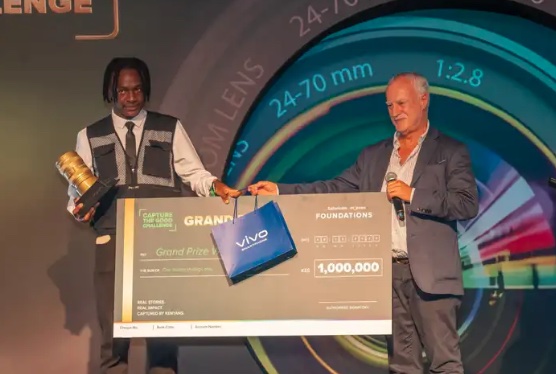
In the photography category, Mathew Meli from Uasin Gishu emerged the overall winner for his work capturing improvements in school infrastructure under the education pillar. Charles Muia from Embu was named first runner-up for his story on the provision of laboratory equipment, while Lameck Ododo from Kericho took second runner-up for his work highlighting kitting Kapkatet Football Club.
In the videography category, Kennedy Kamau from West Pokot took the top prize for The Dream of Poriot, a story on the place of proper school infrastructure in education. David Mutuku from Kajiado was named first runner-up for A Clinic in Kajiado is Helping Bring New Life, which highlights the impact of access to medical care, while Phillip Otieno from Nairobi was named second runner-up for What These Hands Built, which captures a ball-making project, an economic empowerment initiative in Nairobi.
The overall winners in both categories received KES 1 million each, with the first runners-up taking home KES 750,000 each and the second runners-up KES 500,000 each.
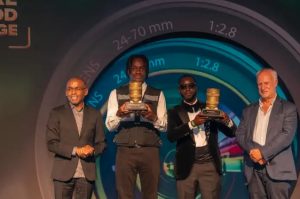
The awards ceremony held at Mövenpick Hotel in Nairobi, marked the conclusion of the five-month nationwide Capture the Good Challenge, which sought to spotlight everyday stories of change in Kenyan communities, as told by any Kenyan with a lens.
“Capture the Good is a showcase of extraordinary talent in Kenya’s creative community and the power of storytelling to bring impact to life. By giving photographers and videographers a platform to showcase their craft, sharpen their skills and tell authentic Kenyan stories, we are not only investing in the growth of our creative economy but also enabling communities to tell their stories of transformation, their own way. We are proud to see these creators use their talent to inspire, connect and shine a light on the good happening across our country,” said Safaricom CEO Peter Ndegwa.
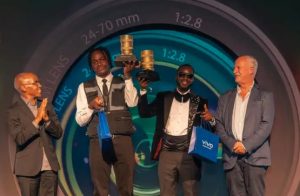
The nationwide challenge, launched in May 2026 by Safaricom and M-Pesa Foundations, invited storytellers to document stories of transformation through photos and videos, themed under education, health and economic empowerment.
The challenge attracted 6,014 applications, with 2,185 participants selected to proceed to the fieldwork stage. A total of 1,155 entries were submitted for judging, from which 360 entries advanced to the regional stage.
The regional phase produced 90 winners, comprising 45 photographers and 45 videographers. The finalists subsequently participated in a two-day masterclass led by industry professionals, including photographers, creatives and storytellers Grace Kahaki, Enos Olik, Mbithi Masya and Mutua Matheka, among others.
Following the masterclass, the 90 participants resubmitted their work for the national phase, with 18 finalists shortlisted for public voting. Voting closed on August 30, 2026, before the winners were unveiled at the awards ceremony.
Beyond the national prizes, the challenge also recognised regional talent, with 30 Gold winners receiving KES 100,000 each, 30 Silver winners receiving KES 75,000 each and 30 Bronze winners receiving KES 50,000 each.
Capture the Good was delivered in partnership with the Photographers Association of Kenya (PAK) and the Photojournalists Association of Kenya (PJAK), and with vivo as the mobile photography partner.
About Safaricom Foundation
Building Communities, Transforming Lives.
Safaricom Foundation partners with Kenyan communities, organizations and institutions to improve and transform lives.
With a footprint in all of Kenya’s 47 counties, and a strong history of partnerships dating back to our inception in 2003, the Safaricom Foundation has worked with Speed, Simplicity and Trust to implement over 1,000 community projects, impacting over 3 million people, through our thematic areas of Health, Education, Environmental Conservation, Economic Empowerment, Water, Disaster Relief, and Arts & Culture.
Our current strategy builds on our strong history of results and partnerships, and will contribute towards Vision 2030 and the Sustainable Development Goals. We will leverage the power of innovation and technology to drive our projects forward; and will also offer a blend of grants, equity and ultra-low cost loans to our partners.
The participation of Safaricom staff in our projects will extend our personalized approach towards partnerships; and our project monitoring and our dissemination forms will provide platforms for technical assistance, learning and capacity building.
About M-PESA Foundation
Since its inception in 2010, the M-PESA Foundation partnered with Kenyans on large scale and long term highly impactful social projects. It aims to promote Health, Education and Environmental Conservation for the social and economic benefit of the people of Kenya and has reached over 3 million people over the years.
Under health, the Foundation has invested in Uzazi Salama, a Maternal and Newborn health project and Daktari Smart, a telemedicine programme that links and provides treatment to children in six hard-to-reach counties in Kenya. In education it supports bright children from poor backgrounds through the M-PESA Foundation Academy.
Under environmental conservation, they have invested in a fencing project at the Mau Eburu Forest to curb recurring human-wildlife conflict, partnered with Reteti Elephant Sanctuary to help protect the orphaned and abandoned elephant calves in the Sanctuary and partnered with NRT to establish and conserve viable and genetically diverse population of Roan Antelope within Ruma National Park in Kenya
Under Integrated livelihoods M-PESA Foundation has partnered with the Kenya Red Cross Society to rehabilitate Nyalani dam in Kwale County to improve food security and livelihoods for the people of Kinango.