

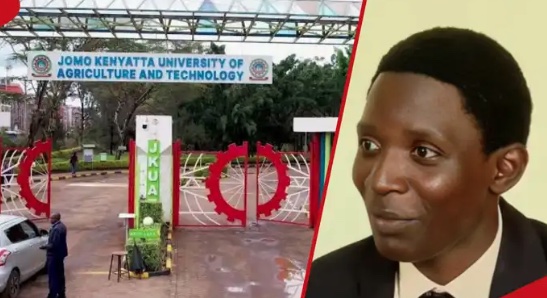
Moses Nyanduga enrolled at JKUAT in 2021 to study for a Bachelor of Science in Agriculture, a programme that was meant to take four years.
Five and a half years on, he is still on campus, not because he failed a unit, but because a series of lecturers’ strikes has pushed his graduation date further and further away.
“For me, I’m spending my years in jail. Not in jail, but it seems like I’m in jail. I’m here in school for now four years plus other months. It means I’ve already wasted one year and two months. Others are in employment. Sometimes I ask myself, ” Where am I heading with my life?” Moses said.
How the Strikes Piled Up
His academic calendar has been disrupted at least three times. A semester scheduled to close in December 2024 only wrapped up in March 2025, after lecturers went on strike for two and a half months. The knock-on effect has been relentless.
“The problems experienced in 2024 were carried forward to 2025, the same to 2026. Now you find a situation whereby during the lecturers’ strike, apart from the lecturers themselves, those experiencing it even more bitterly are the students,” he said.
Beyond the lost time, the financial pressure has been grinding. Moses describes a survival strategy he calls “010,” shorthand for one meal a day, skipping lunch not out of preference but necessity. When a strike drags on, rent and food costs keep accumulating even when no teaching is happening.
“Last year, the lecturers’ strike went on for two months. For two months, you as a student have to pay for two months extra rent, extra food and other contingency costs. When your parents send you, for example, KSh 3,000, if you’re not careful, you can spend it within one week,” he explained.
Graduation Pushed to December, Possibly Beyond
Moses was expecting to graduate in June. With supplementary exams yet to be confirmed due to the ongoing disruptions, that date has shifted to December.
If the October special exams do not go ahead, he could be looking at yet another year on campus.
The emotional weight is just as heavy as the financial strain. Watching peers who attended private universities move into employment one or two years ago has been difficult to process.
“You have spent several years in university to an extent you worry about life. I look at some of the guys who went to private universities; they are already one or two years into employment,” he said.
Moses stops short of blaming lecturers entirely, acknowledging that the industrial action reflects genuine grievances. However, he insists that students are being forgotten in the standoff between universities and academic staff.
“A time is coming when we shall join the lecturers in the strike because it is not only the lecturers who are suffering during this period. It is we, the students, the lecturers and our parents,” he warned.