
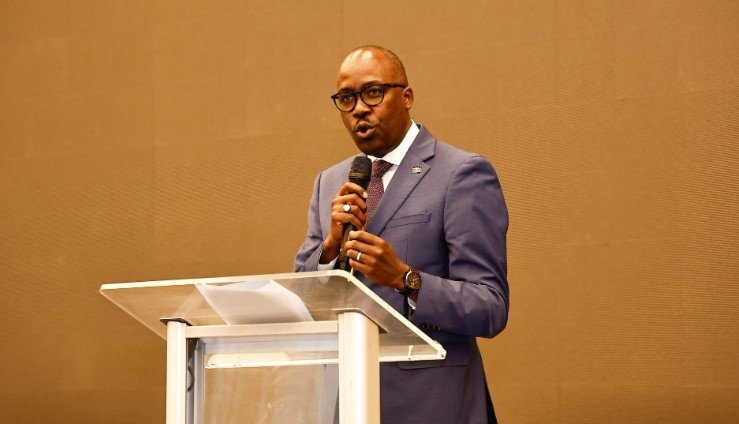
PS Sing’Oei holds that the move is not detrimental but cautionary, prompting the government to heighten its response to the deadly virus that has so far claimed one life.
“Kenya has been put in a category that is more of a caution, and there are no implications with respect to barring travelers coming from Kenya. It is important for them to advise their citizens,” he told NTV on Wednesday.
The US State Department raised its travel advisory from Level 2 to Level 3 on October 19, urging American travellers to reconsider visiting the country amid cases of Ebola caused by the Bundibugyo virus and other health concerns.
This comes as Kenya has confirmed a ninth case of Ebola (Bundibugyo virus disease), with the Ministry of Health reporting that all eight surviving patients are responding well to treatment.
PS Sing’Oei said that the bilateral ties between the US and Kenya also fast-tracked the construction of the Ebola quarantine facility in Nanyuki, saying that it will also contribute to an effective response.
“The idea of the government was to build capability before this issue hit home. Nobody was anticipating that the first case would be brought by a Kenyan national,” he noted.
He believes that cooperation between nations will be instrumental in combating the spread of the Ebola virus.
According to the PS, surveillance standards in all entry points should be heightened to cushion its citizens and the economy from potential shocks.
“Let us ensure that we have a response that is proportionate to the risk. States have to weigh the cost of certain measures against the economic consequence on trade, travel, education and social services,” he told NTV on Wednesday.
He opined that the security measures taken so far by countries under Ebola threat, among them Kenya, Uganda and DRC, are sufficient but will require heightened vigilance to ensure compliance.
“I believe that the measures taken so far are adequate only to the extent that surveillance deployed is sustained at every border rather than closing them down,” he noted.
The US-funded bio-isolation facility drew resistance from critics, many raising concerns over transparency, sovereignty and foreign influence.
The US has also announced a Ksh.1.2 billion donation in new direct support to Kenya’s efforts to detect Ebola and prevent its spread.
The US State Department added that since the outbreak of the virus, the US has provided Ksh.115 billion in direct health and humanitarian assistance to combat the Ebola outbreak in the East and Central African region.
Meanwhile, the Kenyan government is preparing a Ksh.70 billion Ebola fund mitigation approach through the National Treasury.