

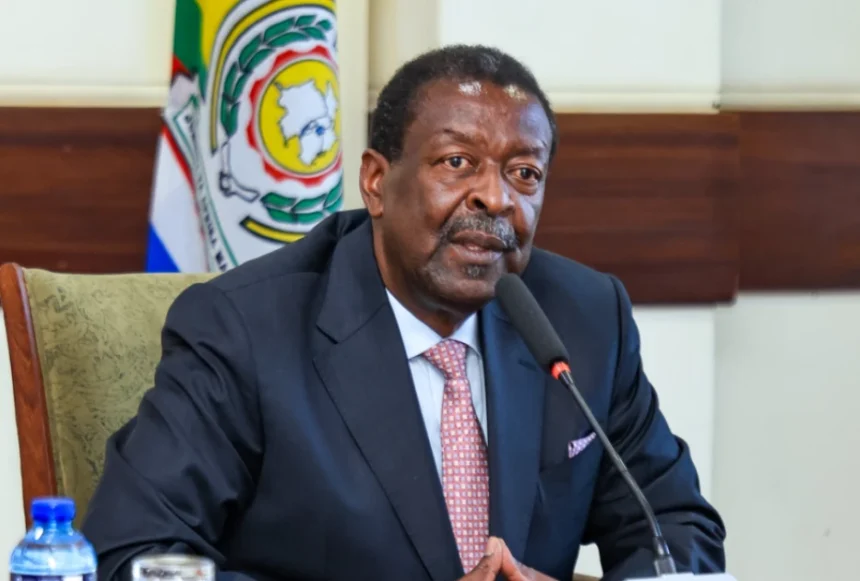
The government has successfully rescued and repatriated 27 Kenyans who were stranded in the Russian Federation after they were illegally enlisted to fight in the ongoing Russia–Ukraine war.
Prime cabinet secretary and cabinet secretary for foreign and diaspora affairs Musalia Mudavadi, in an update released this week, said the government secured the safe return of the Kenyans through swift diplomatic and consular interventions coordinated by Kenya’s mission in Moscow.
The Ministry of Foreign and diaspora affairs said records show a majority of the returnees had fallen victim to recruitment networks linked to the Russian military.
“We have facilitated 27 Kenyans to come back home away from the frontline and from what they thought were different jobs but ended up being lured into battle,” said Mudavadi.
The developments in the rescue operations have necessitated an urgent undertaking by the Kenyan government, with Mudavadi announcing that plans are at an advanced stage for him to visit Moscow to engage directly with the Russian government.
The visit, among other issues, aims to address the circumstances that drew Kenyans into the Russia–Ukraine war and to prevent further exposure to danger.
“We have seen loss of lives, and I am planning to make a visit to Moscow so that we can emphasise that this is something that needs to be arrested,” Mudavadi said.
“The Kenyan ambassador to Russia, Peter Mathuki, has been in contact with the relevant agencies, and we intend to ensure structured bilateral agreements just like the ones we have entered with different countries such as Austria and Germany, where Kenyans will get legitimate and decent jobs,” he added.
Mudavadi emphasised that Kenya’s approach is anchored on diplomacy and dialogue, aimed at understanding how Kenyans are affected and preventing further risks.
Over the weekend, he raised fresh concerns over rising cases of Kenyan youth being lured into unsafe jobs abroad, including reports involving recruitment to countries such as Russia.
Highlighting alarming accounts from rescued nationals, Mudavadi said some were forced to assemble drones and handle hazardous chemicals without adequate training or protective gear. He regretted that some citizens may have found themselves in precarious situations due to misinformation, irregular and illegal recruitment, or false promises of work.
“We are concerned that even some don’t inform their families when they travel and later fall victim to what is happening on the war front,” he said.
Mudavadi revealed that some victims reported severe injuries and exploitation while working under the Russian military.
The threat extends beyond the battlefield, with Mudavadi warning that some Kenyans are being drawn into forced criminality abroad, including drug trafficking and forced labour.
“There are many traps other than the famous debate on recruits for war in Russia. Incidents of human trafficking linked to human organ transplants have been reported, as well as cases of drug trafficking and other indecent jobs where our brothers and sisters fall victim,” he warned.
In previous addresses, Mudavadi said that following their return, the government offers the rescued Kenyans comprehensive psychosocial support to help them recover and reintegrate into society.
He further noted that the state department for diaspora affairs guides the returnees through a structured reintegration programme designed to support their physical, mental and social wellbeing.
Mudavadi has also disclosed that President William Ruto has engaged the Ukrainian government regarding Kenyans detained as prisoners of war, pursuing diplomatic means to ensure they are released and safely returned home.