

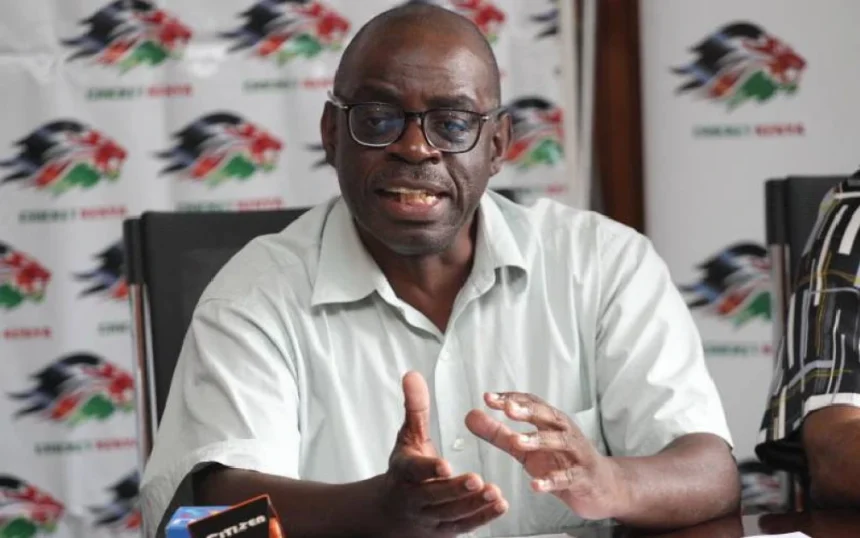
The April 19 elections are set to usher in a new era for Cricket Kenya as the country races to avert sanctions from the International Cricket Council (ICC).
In an exclusive interview with Citizen Digital, Cricket Kenya CEO Ronald Bukusi said the elections are critical, describing them as the final requirement set by the ICC.
The polls come at a crucial moment after months of internal wrangles stretching close to two decades that have rattled confidence in the federation and drawn scrutiny from both government and the ICC.
“These elections are very significant. Over the last seven, eight months, we have been in a very uncomfortable situation,” Bukusi said, pointing to sustained governance disputes that have threatened to derail the sport’s progress.
The April 19 vote is being positioned as the final step in a reform roadmap agreed upon with the ICC, the Ministry of Sports and the Registrar of Sports, following a fact-finding mission by the global body in October last year.
Bukusi described the polls as a chance to clean up the house, giving stakeholders an opportunity to elect a new board capable of restoring order and steering a game once dominated by Kenya on the global stage.
All positions are contested except for the Vice Chairperson role, he said, noting that even disputed nominations had undergone appeals before being conclusively determined by the Independent Elections Panel.
As a result, lawyer and former women’s team captain Pearlyne Omamo has been elected unopposed.
The elections will be held at the federation’s offices at Ruaraka Sports Club, marking what insiders describe as a high-stakes contest amid emerging alliances and heightened scrutiny.
“We really need strong leadership. We need people of integrity, people who can help us grow. We need people of good moral values,” Bukusi said.
Bukusi revealed that the federation has been working to comply with ICC requirements, implementing all recommendations outlined after last year’s meeting.
“All the steps they asked us to take, we created a roadmap and have kept them informed of everything we are doing. This is now the last step,” he said.
He disclosed that even last year, the ICC had considered drastic measures, including suspending Kenya.
Bukusi recently engaged ICC leadership during the ICC Africa Regional Conference in Namibia, where Kenya sought to reassure global cricket authorities of its reform progress.
“We spent time discussing the various challenges we have at Cricket Kenya and the possible solutions,” he said, noting that the ICC board will convene at the end of April to review Kenya’s status.
Before the wrangles erupted in August last year, the federation had begun regaining momentum, attracting ICC events and rebuilding its international profile.
He pointed to emerging talent including a successful national Under-19 girls’ team that impressed at the Division 2 World Cup qualifiers in Uganda as evidence of untapped potential.
“That team is the future of Cricket Kenya. There is great potential, especially in women’s cricket, which remains largely untapped,” he said.
Recent policy gains, such as the formal introduction of cricket into the school curriculum under physical education, could further expand the talent pipeline if backed by stable governance.
Ultimately, Bukusi framed governance as the single most critical factor in determining the sport’s future.
“Governance you don’t see it, but you feel the effects of it. That’s where we have come short,” he said.
His message to stakeholders is clear: the April 19 elections are not just about leadership positions, but about restoring trust, unlocking opportunities and securing Kenya’s place in international cricket.
“I want cricket to grow. I want those 13-year-olds not just three, but 50 of them,” he said. “That will only happen if we have good governance.”