

The Supplementary Appropriations Bill, approved by the National Assembly on April 2, 2026, has increased the national budget by 9.1%, from Ksh.4.301 trillion to Ksh.4.695 trillion.
This will result in an increase of total expenditure by Ksh.393.1 billion. It comprises Ksh.363.8 billion for the National Government and Ksh.29.27 billion for the Consolidated Fund Services.
The security sector has been allocated Ksh.60 billion, as the State Department for Internal Security and National Administration will receive Ksh.11.9 billion.
This includes Ksh.3.9 billion for security operations, Ksh.2 billion for the National Integrated Security Command and Control System (NISCCS) and Ksh.4 billion for police modernization and the national integrated security command and control system.
Likewise, Ksh.2 billion has been allocated for compensation of victims of demonstrations and police brutality.
The Education sector will also receive Ksh.24.2 billion for the Teachers Service Commission (TSC) to cover salary shortfalls and health insurance contributions for teachers, and an additional Ksh.3 billion for pending bills for teachers’ medical cover.
Another Ksh.4.1 billion has been allocated to Higher Education Loans Board (HELB), Ksh.3.88 billion to clear outstanding university salary arrears from the 2017–2021 Collective Bargaining Agreement (CBA) and to support the Wings to Fly programme through TVET.
Additionally, Ksh.6 billion will be sent to the Higher Education, through the State Department for Higher Education for Moi University and Kabarnet University, Ksh.1.5 billion for the University Funding Board, and Ksh. 2.6 billion to the capital expenditure for the Kenya-China TVET Project Phase III development partner-funded project.
Kenya’s electoral body, the Independent Electoral and Boundaries Commission (IEBC), has been allocated Kshs.2.9 billion to settle its pending legal bills.
The funds are expected to support stability, modernize security command systems, and restore confidence in electoral institutions.
The Kenya Revenue Authority (KRA) will receive Ksh.17.6 billion to boost tax collections and help the government minimize public borrowing.
Health has been allocated Ksh.4.7 billion through the State Department for Medical Services and Kshs.775 million under Public Health and Professional Standards.
Under these, Ksh.4 billion will settle pending bills of the defunct National Health Insurance Fund (NHIF), Ksh. 675 million will upgrade Level 4 hospitals across the country and Ksh.5.4 billion will serve the internship programme for doctors to have a total of Kshs. 9.8 billion
Another Ksh.2.5 billion will be sent to Moi Teaching and Referral Hospital, and Ksh.2.6 billion will be wired to the vaccine programme.
In the Infrastructure and Housing sector Ksh.4.5 billion has been allocated to the Horn of Africa Gateway development projects under the State Department for Roads, and Ksh.25 billion will serve the Affordable Housing Programme.
The agriculture sector will receive over Ksh.17 billion, including Ksh.10 billion for the fertilizer subsidy programme, Ksh.1.0 billion for the Tea reforms programme, Ksh.1.0 billion for MSMEs Agricultural credit-AFC, Ksh.2.0 billion for sugar reforms (including salary arrears) and Ksh.1.5 billion for food security and crop diversification.
The Supplementary budget has also allocated Ksh.350 million to the Blue Economy and Forestry, Ksh.2 billion for the Forestry Department and Ksh.500 million through the Watershed Improvement Project (KEWASIP) to expand reforestation efforts and protect vital watersheds.
The government seeks to adopt non-tax revenue mobilisation avenues like privatisation and securitisation to finance the budget.
“With improved economic conditions and stronger revenue efforts, the government is better positioned to support its citizens while maintaining overall fiscal stability,” read the report in part.
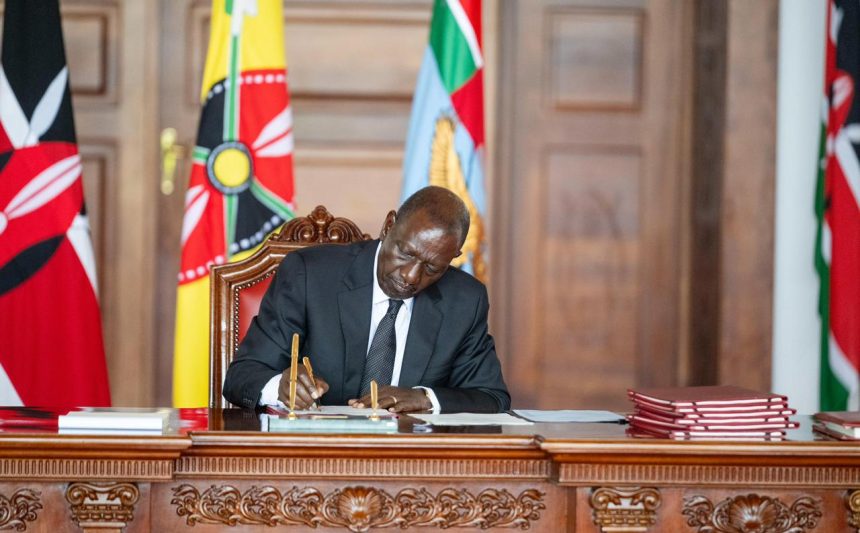
President William Ruto has assented to the Bill.