

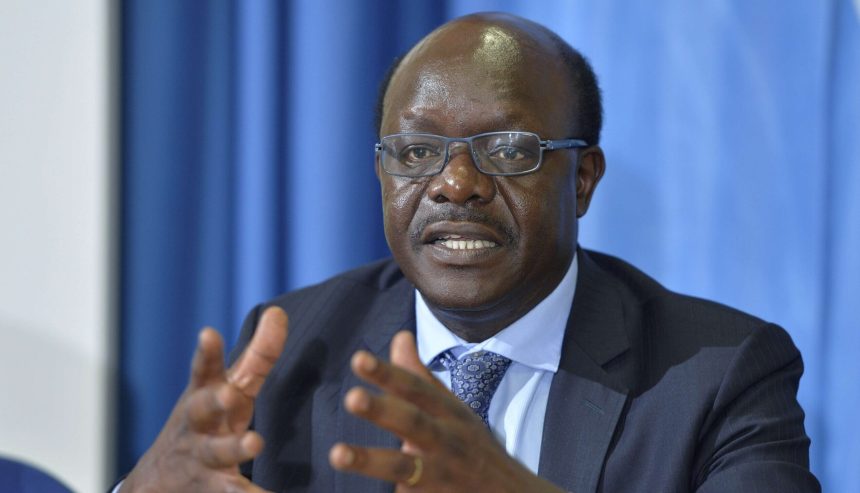
According to the political premier, there are deep cracks in the deal that have proven it impossible to cushion Kenyans from unforeseen crises like the one occasioned by the war in the Gulf region.
In his view, the importer should be the National Oil Corporation of Kenya, not private local firms known as Oil Marketing Companies (OMCs), to help regulate fuel price shocks.
“The rough edges of spiking in the marketplace can be diminished by shielded government support. If you have G-to-G the importer should be the National Oil Corporation of Kenya, because as a national entity it can be a player in stabilizing and pressing down pressure on petroleum commercial markets,” he told NTV on Monday.
“Because the importer is not government and there are commercial interests, we start suffering the consequences of greed disguised as G-to-G.”
Since 2023, Kenya has been importing fuel from three international oil companies as supply partners: Saudi Aramco, the Abu Dhabi National Oil Company (ADNOC), and the Emirates National Oil Company Group (ENOC).
The deal was inked to cure shortages that were sparked by the shortage of dollars for oil marketers caused by currency hoarding and foreign outflows.
Dr. Kituyi believes that alternative structures would permanently shield the nation from soaring fuel prices, arguing that he would opt for suspending a few taxes in the event of global price spikes.
“I would make the importer a national parastatal to prioritise stabilising the cost to the consumer,” he said.
“In times of crisis like these, I would suspend excise duty on petroleum to reduce the price at the pump and also the Road Maintenance Levy and reinstate it at an appropriate level.”
The Gulf war saw the Energy and Petroleum Regulatory Authority (EPRA) reviewing pump prices up by a record Ksh.40 from midnight on April 15, with diesel rising by Ksh.40.30 per liter to retail at KES206.84 in Nairobi, while petrol climbed by Ksh.28.69 to Ksh.206.97.
This was later revised on the night of April 15, after EPRA made an addendum following a directive by the National Treasury to cut VAT on petroleum products from 13 per cent to 8 per cent.
This revision would see the price per litre of Super Petrol and Diesel decrease by Ksh.9.37 and Ksh.10.21, respectively, while that of Kerosene remained unchanged.
Amid harsh criticism from the opposition, President William Ruto has defended the high cost of fuel, saying it matches its status as a Low-and Middle-Income Country (LMIC).
Speaking during a church service on April 19, Ruto downplayed comparisons to other fuel prices in the East African Community.
“I know many people in Kenya keep asking why it is that sometimes the prices of fuel are different in Kenya from our neighbours. Kenya is a middle-income country. Our neighbours are the least developed countries,” he said.
“There is a big difference. If you want to compare Kenya fairly with others, compare Kenya with other middle-income countries.”
In Kenya, there are 9 taxes charged on petroleum products.
They include 16% Value Added Tax, Excise Duty, Road Maintenance Levy, Petroleum Development Levy, Petroleum Regulatory Levy, Railway Development Levy, Anti-Adulteration Levy, Merchant Shipping Levy and Import Declaration Fee.
To insulate the nation from global shocks, experts have argued that the government can establish a strategic petroleum reserve, pursue supply agreements with alternative producers and suspend key levies to have targeted subsidies for essential transport.