

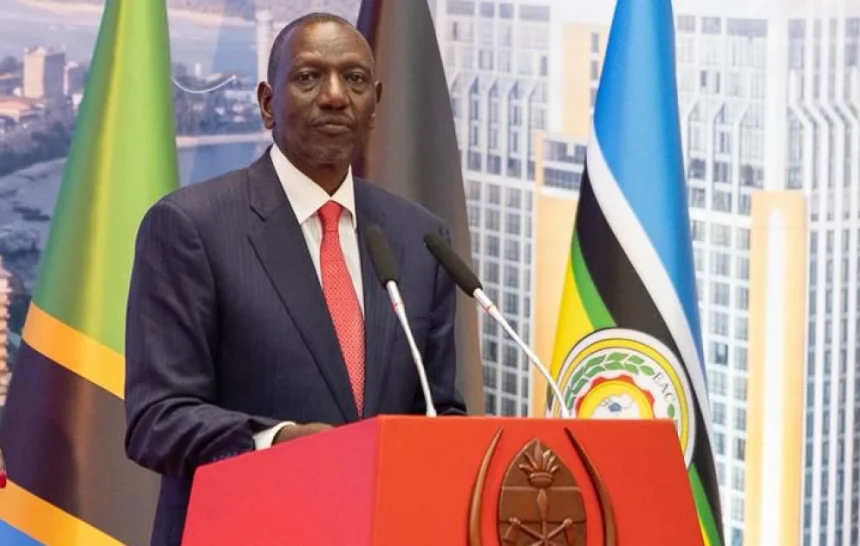
It has drawn attention to a long list of similar blunders by the Head of State. Citizen TV traces this trail that has often left the chief diplomat having to walk back his words.
President William Ruto wears many hats: the Head of State and Government, Commander-in-Chief of the Defence Forces, and Chief of the Order of the Golden Heart. On the regional and global stage, he is the country’s topmost diplomat. Nearly four years into his presidency, he has faced criticism over what analysts have termed as an unconventional approach to diplomacy.
In a space that thrives on order, skill, tact, strict rules and protocol, President Ruto has often found himself on the wrong foot. Just days ago, without consulting his host, he announced a multi-billion-dollar joint oil refinery in Tanga. The problem, the person in charge of Tanga, President Samia Suluhu Hassan, found out through the news.
“While we were speaking inside, I pressed Ruto and asked him, ‘You went ahead and announced a refinery in Tanga, why was I not aware? He will explain himself,” Suluhu noted.
“I have been informed that my decision to announce the building of a refinery in Tanga has not sat well with you. If I knew, I would have announced that refinery to be built in Mombasa,” Ruto stated.
But it wasn’t just Tanzania. Late last month, Ruto managed to offend the continent’s most populous nation, Nigeria, by suggesting their English was essentially incomprehensible.
“We speak some of the best English in the world. If you listen to a Nigerian speaking, you do not know what they are saying. You need a translator even when they are speaking English,” he remarked.
He later walked back the comment, terming it a joke. But that joke did not land. Abuja was not laughing, and the president was forced into a rare, awkward clarification, referring to Nigerians as “in-laws” to douse the fire.
The gaffes have not been limited to Africa. For nearly two years, Kenyan police have been the face of a UN-backed mission to tame Port-au-Prince, a decision that President Ruto undertook without a reciprocal arrangement in place.
“We cannot walk away from the men, women and children of Haiti. It is a call of duty. It is in solidarity with humanity,” said William Ruto.
Ruto’s unfiltered style of diplomacy has drawn both him and the country criticism, from Kenya’s apparent hosting of sanctioned leaders of the RSF from Sudan, which resulted in Kenya’s exports to Sudan being banned, to remarks terming East African countries as less developed than Kenya, and questioning the suitability of the African Union to its purpose.
The missteps have been defining, but they did not start yesterday. On the second day of his presidency, he tweeted, then deleted, a rushed decision to sever ties with the Sahrawi Arab Democratic Republic.
While the president’s diplomatic role has opened doors of opportunity for the country, his gaffes risk eroding Kenya’s long-standing image and reputation for soft diplomacy.