
The World Health Organization (WHO) has declared an Ebola outbreak in the Democratic Republic of Congo a public health emergency of international concern.
The declaration follows confirmed outbreaks caused by the Bundibugyo strain of the Ebola virus in both countries, with cases now detected across multiple locations, including capital cities.
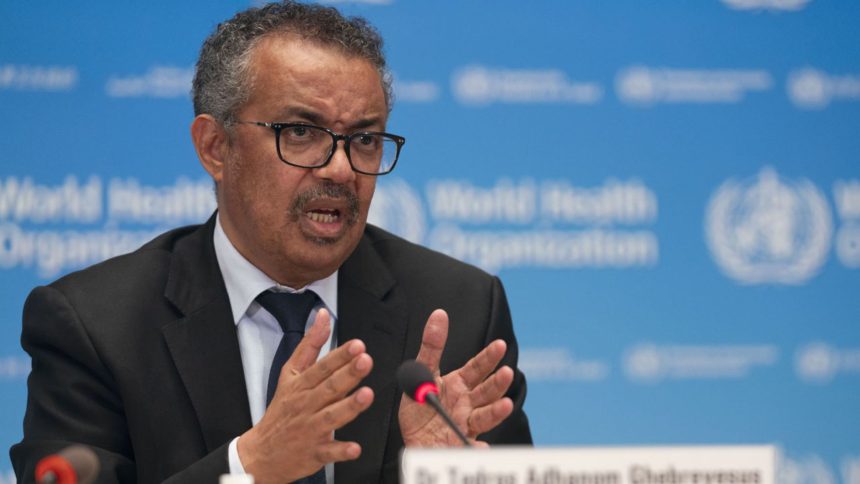
WHO Director-General Tedros Adhanom Ghebreyesus announced the decision after consultations with authorities in the affected nations, saying the outbreak now constitutes a Public Health Emergency of International Concern, though it does not yet qualify as a pandemic emergency.
The agency said the outbreak in DR Congo’s eastern Ituri province, which has seen around 246 suspected cases and 80 deaths reported, does not meet the criteria of a pandemic emergency.
But it warned it could potentially be “a much larger outbreak” than what is currently being detected and reported, with significant risk of local and regional spread.
In a statement, the Ugandan government said the patient who died was a Congolese citizen whose body had already been returned to DR Congo.
A laboratory has also confirmed an Ebola case in the eastern city of Goma, currently controlled by the M23 rebels, the AFP news agency reported on Sunday.
The WHO said the ongoing security situation and humanitarian crisis in DR Congo, combined with high population mobility, the urban location of the hotspot, and the large number of informal healthcare facilities in the region increased the risk of spread.
Countries bordering the DR Congo are considered high risk due to trade and travel.
The WHO advised that DR Congo and Uganda establish emergency operation centres to monitor, trace, and implement infection-prevention measures.
To minimise spread, the health agency said confirmed cases should be immediately isolated and treated until two Bundibugyo virus-specific tests conducted at least 48 hours apart are negative.
For countries bordering regions with confirmed cases, governments should enhance surveillance and health reporting.
The WHO added that countries outside the affected region should not close their borders or restrict travel and trade as “such measures are usually implemented out of fear and have no basis in science”.
WHO director general Dr Tedros Adhanom Ghebreyesus warned there are currently “significant uncertainties to the true number of infected persons and geographic spread” of the outbreak.