

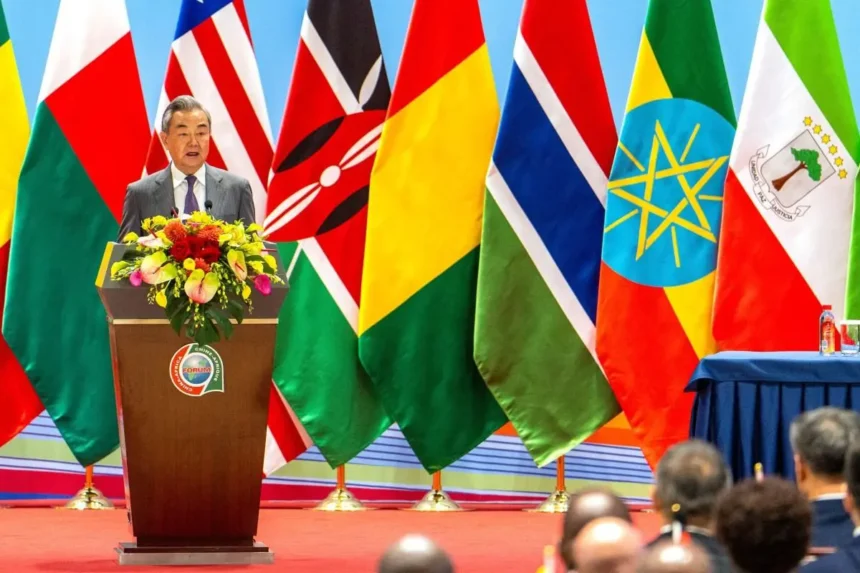
China will begin implementing a zero-tariff policy for nearly all African countries from May 1, President Xi Jinping announced on Saturday, February 14, according to state media.
Beijing had already eliminated tariffs on imports from 33 African nations and previously signalled that the policy would be expanded to cover all 53 African countries with which it maintains diplomatic ties. The only exception will be Eswatini, which recognises Taiwan diplomatically rather than Beijing.
China remains Africa’s largest trading partner and has played a major role in financing large-scale infrastructure projects across the continent under its expansive “Belt and Road” initiative.
From May 1, all qualifying African nations will benefit from duty-free access to the Chinese market. Eswatini is excluded because of its diplomatic relationship with Taiwan, which China regards as part of its territory and has not ruled out reclaiming by force.
The announcement comes as several African countries increasingly strengthen trade ties with China and other partners following the imposition of steep global tariffs by US President Donald Trump last year.
Xi said the zero-tariff arrangement “will undoubtedly provide new opportunities for African development,” making the declaration as African leaders gathered in Ethiopia for the annual African Union summit.
Meanwhile, China’s Foreign Minister Wang Yi issued a warning to the United States over Taiwan during remarks at the Munich Security Conference in Germany. Wang cautioned Washington against actions he described as “instigating and plotting to split China through Taiwan, crossing China’s red line.”
“This could very likely lead to a confrontation between China and the United States,” he said. He added that Beijing hopes for a constructive approach from Washington, stating, “but we are also prepared to deal with various risks.”
China claims Taiwan as its territory and has not ruled out the use of force to assert control. The United States remains Taiwan’s principal international supporter and arms supplier, making American involvement central in the event of heightened tensions.
Wang also addressed relations with Japan, which have been strained since Prime Minister Sanae Takaichi assumed office in October. He urged caution against nationalist influences in Tokyo.
“The Japanese people should no longer allow themselves to be mani