
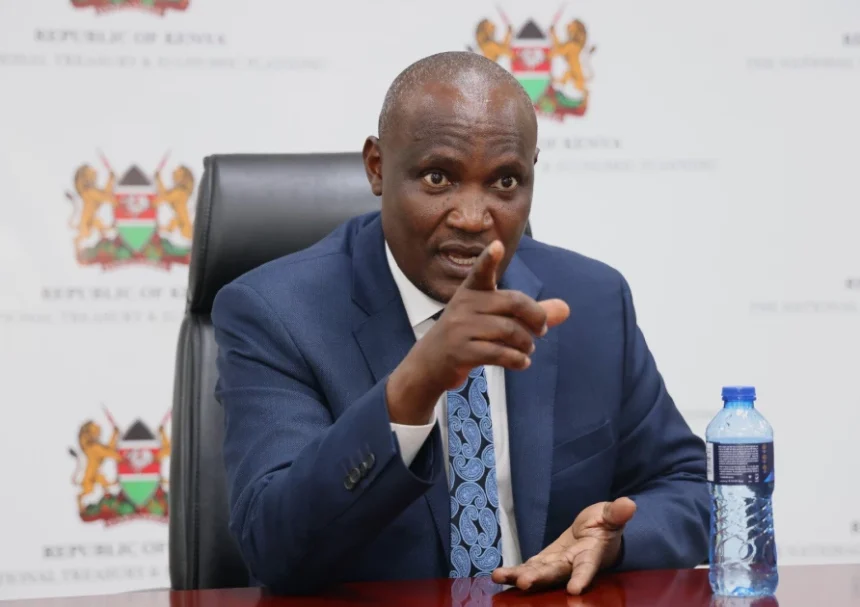
CS Mbadi argues that the increased prices are the aftermath of the Gulf war between the United States and Iran and the affected channels of supply will continue crippling fuel costs.
He added that the government is monitoring the situation ahead of an expected Executive meeting with President William Ruto to address the crisis.
CS Mbadi intimated that the State will intervene to stabilize prices for June, using possible preventive avenues, including the Ksh.5 billion from the Petroleum Development Levy (PDL) Fund.
“We will look at the subsidy kitty that we have and if that is not going to be sufficient we will see what to do. We will then look at the fuel levy especially the VAT. And we will check on what to cut in terms of expenditure,” he told NTV on Monday.
He further opined that the ongoing strike led by public transport services operators will deepen the crisis, arguing that it will destabilize the economy and resources to cushion the market will be limited.
“I don’t think a strike is the solution. The price of petroleum products has increased everywhere in the world,” he argued.
“It is now like biting the finger you want to hear. The economy will be hit further and we will have no resources to further subsidize. I am not happy to see Kenyans walking.”
He argued that the Transport Sector Alliance and other stakeholders have not engaged the government on how to better address the situation.
“Have they spoken with us and now they are saying that there is nothing that the government can do?”, he posed.
“We will seat again when the President comes back (from Azerbaijan) and see what we can do but let us not be emotional about this. It was not necessary to call the strike.”
His sentiments come as the Energy and Petroleum Regulatory Authority (EPRA) increased the cost of Super Petrol and Diesel by Ksh.16.65 and Ksh.46.29 per litre, respectively, while the price of Kerosene remained unchanged.
In Nairobi, Super Petrol, Diesel and Kerosene retails at Ksh.214.25, Ksh.242.92 and Ksh.152.78 effective midnight for the next 30 days.
The price spike also saw fuel prices in Mombasa for Super Petrol, Diesel and Kerosene retailing at Ksh.211.09, Ksh.239.64 and Ksh.149.49, respectively.
This stirred uproar among Kenyans, sparking nationwide protests as transportation services and businesses remained paralyzed on Monday.
Transport Sector Alliance announced that stakeholders in the sector had “unanimously reaffirmed” that no vehicle would move starting midnight ahead of the Transport Sector Fuel Strike.
The group said the planned shutdown will involve passenger transport, cargo and logistics, ride-hailing services, motorcycle transport, tourism transport, driving schools, school buses and private motorists.
Most Kenyans were forced to walk to their work places and some schools remained closed.