
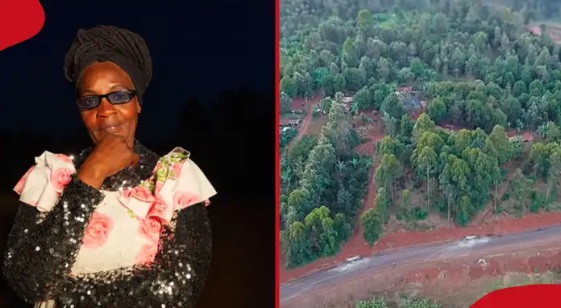
For decades, residents along the Kivwe-Kevote corridor in Runyenjes woke up to the same gravel road that turned into a muddy obstacle every time the rains arrived. Today, fresh tarmac is finally changing that picture, and for many of those residents, the sight of it is almost hard to believe.
Samuel Mugo, a mechanic who has spent much of his life along the route, put it plainly. “Since 1987, this road has been talked about being tarmacked. Today, it has tarmac,” he said, reflecting on a promise that had outlasted multiple administrations.
A Childhood Promise Finally Taking Shape
Gladys Njagi, another resident, said the upgrade carried deep personal meaning. She grew up listening to adults speak about a road that would eventually be built.
“I was told about this road when I was a child. Now I have seen it,” she said. In a separate remark, she added: “I have suffered here for years, almost to the point of growing old, but now I have seen the tarmac,” she told TUKO.
Eliud Nyagah Njue echoed that sentiment, noting that communities along the route had received similar assurances from one government to the next. He called on the relevant authorities to maintain the pace of work and see the project through to completion.
Kennedy Munene of Makengi acknowledged that construction was still ongoing in certain sections, but said the progress visible on the ground had lifted spirits among residents.
“The road has not been completed yet, but the work is continuing, and we are happy,” he said.
What the Tarmacking Entails
The works involve upgrading a 27-kilometre stretch, the Kivwe-Karingari-Kevote-Nduuri-Kanja-Munyutu-Gorofa road, to bitumen standards. It is divided into two 13.5-kilometre links, with the first running from Kivwe through Karingari and Kevote to Nduuri, serving communities in both Runyenjes and Manyatta constituencies. The KSh1.5 billion project is entirely funded by the national government and is being implemented under the oversight of the Kenya Rural Roads Authority (KeRRA).
Deputy President Prof. Kithure Kindiki, who has undertaken several development tours across Embu County and the broader Mount Kenya region, said the government intended to stand on its record of completed works rather than campaign promises when elections come around.
“We will showcase what we have done for wananchi when it is time for campaigns. We will have tangible projects to defend our tenure in office, including roads, water projects, increased electricity connection and modern markets. This will be our scorecard,” he said.
For residents who spent years manoeuvring potholes and muddy stretches, the ongoing construction represents something more than infrastructure. It is, as Njagi described it, the fulfilment of a promise she has been waiting to see since she was a child.