
The Secretary General’s advocacy for Africa’s voice in the UN system follows ongoing efforts for the continent to have permanent membership in the UN Security Council.
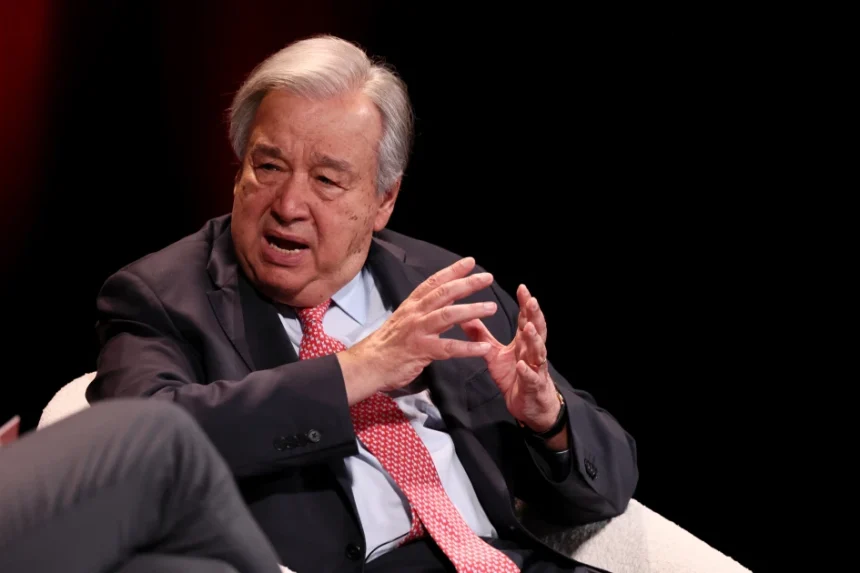
Speaking in Nairobi on Monday when he commissioned projects at the UN headquarters, Guterres argued that Africa has shown potential in advancing clean energy, digital innovation, peacebuilding and economic transformation across the globe.
However, Guterres believes that the continent has been disadvantaged due to obstacles created by the global community.
“But that potential is being held back by global obstacles that Africa did not create – from unjust
borrowing costs and crushing debt burdens to a deeply unequal international system that reflects
last century’s power relations,” said Guterres during the inauguration of new office buildings and groundbreaking of conference facility at the UN Office in Nairobi, Kenya.
The Secretary General argued that the continent’s potential has been constrained by an unfair international system.
“The United Nations must be closer to the people it serves – connected to their realities, equipped to support the solutions they are building. That is also why I am here. To reaffirm a simple truth: Africa must have the voice, representation and resources its people deserve,” Guterres added.
The UN boss referred to the high borrowing costs that have hampered development in the Global South, and climate vulnerabilities that the continent grapples with without goodwill from developed countries.
“And too often, African countries are expected to live with decisions made in institutions where they do not have equal voice. That must change. We need deeper reform of the international financial architecture,” said the Secretary General.
Guterres described the lack of Africa’s permanent representation in the UN Security Council as a historic injustice.
Currently, the UN Security Council consists of 15 members, including five permanent members (P5) with veto power. These are China, France, Russia, the UK, and the US. The other non-permanent members, which include African nations, are elected for two-year terms.
President William Ruto has also been pushing for the restructuring of the multilateral system to have Africa’s representation in the Security Council and fair borrowing costs.
During the 2025 United Nations General Assembly (UNGA), Ruto demanded reforms that would provide at least two permanent seats with full rights – including the power to veto – and two additional nonpermanent seats.
“You cannot claim to be the United Nations while disregarding the voice of 54 nations. It is not possible,” said Ruto in his address to the annual high-level debate.