

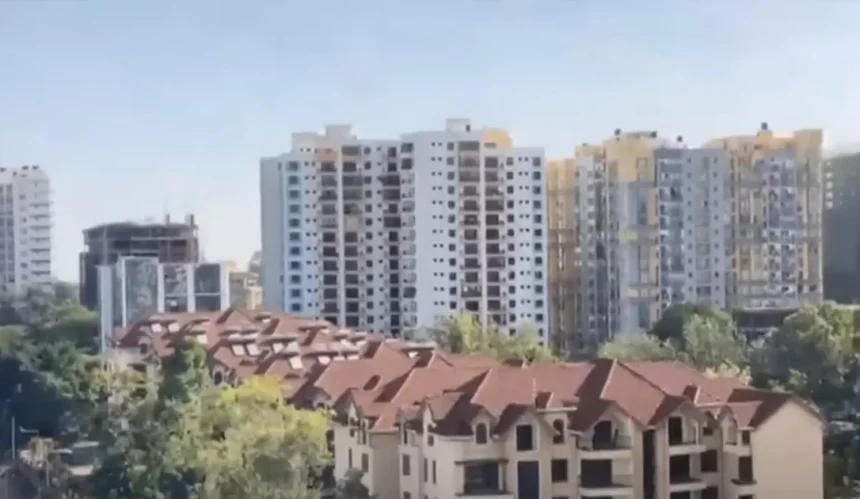
As Nairobi grows upwards with apartments competing to scrape the sky with higher floor levels, millions of residents now share walls, parking spaces, water tanks and security gates with dozens, sometimes hundreds, of neighbours.
The result is a new kind of community, one that exists as much on WhatsApp as it does in the apartment blocks themselves.
Almost every apartment complex today has an estate WhatsApp group. In theory, they are meant to solve problems quickly. A burst pipe, a suspicious stranger, a power outage or a missing package can be reported within seconds. Residents mobilise for emergencies, owners are able to trace lost items and security alerts spread faster than ever before.
But somewhere between “Did someone accidentally take clothes from my hanging line” and “Who left rubbish outside the door?”, many of these digital neighbourhoods have evolved into battlegrounds.
Anyone who has lived in a Nairobi apartment in a middle-class estate for long enough knows the script. A resident complains about loud music. Another questions how service charge money is being spent. Someone proposes repainting the building or installing CCTV. Others accuse the management committee of making unilateral decisions. Soon screenshots are flying, voice notes get longer, and what began as a maintenance issue turns into accusations of incompetence, favouritism or abuse of power.
The arguments rarely stay online.
Across Nairobi, disputes over estate leadership, service charges, pets, parking, renovations and noise increasingly spill into residents’ meetings, management offices and, in some cases, police stations and courtrooms. Earlier this year, leadership wrangles at an estate on Kiambu road escalated to police investigations after residents alleged harassment within the estate forum, highlighting how digital disagreements can become real-world conflicts.
The pattern reflects a broader shift in urban living.
Unlike traditional neighbourhoods where people knew one another for years, apartment communities are fluid.
Owners and tenants move frequently, many residents work long hours, and relationships are often built almost entirely through digital communication. WhatsApp becomes the residents’ association, complaints desk, noticeboard and courtroom all rolled into one.
Without face-to-face conversations, misunderstandings multiply.
A message typed in frustration can be interpreted as hostility. A delayed response from management is seen as indifference. Residents who rarely attend physical meetings suddenly become vocal online, where it is easier to challenge decisions than to volunteer for committee work.
Michael Wambua, a resident at an estate in Athi River, told Wananchi Reporting: “Whenever there’s loud music, my house number is the first one mentioned in the group. Last weekend I wasn’t even in Nairobi, but people had already decided it was me before anyone checked. Once you’re labelled ‘the noisy neighbour’, every complaint somehow finds its way to your door.”
The very technology designed to improve communication can magnify conflict.
Yet estate WhatsApp groups are not the villains of the story.
Many residents say they have prevented burglaries through instant alerts, organised blood donations during emergencies, found missing children and coordinated neighbourhood clean-ups without waiting for formal meetings. During water shortages or security incidents, these groups often become the fastest source of reliable information.
The problem is less the platform than the absence of agreed rules.
Few estates establish clear guidelines on what belongs in the group, how disagreements should be handled or when issues should move from WhatsApp to formal meetings. The result is that every disagreement, from barking dogs to multimillion-shilling renovation projects, is debated in the same public forum.
Resident associations have long argued that community disputes are becoming more common as Nairobi’s housing density increases, making structured engagement and clear governance more important than ever.
Perhaps that is the paradox of modern apartment living.
The same neighbour who ignores your greeting in the lift may write a detailed message challenging the annual budget. The resident who never attends the AGM may become the loudest voice in the WhatsApp group. And the committee member who volunteered to improve the estate may end up defending every decision before an audience of critics armed with screenshots.
In many ways, Nairobi’s estate WhatsApp groups have become miniature democracies; messy, passionate and occasionally exhausting. They reveal something larger about city life: as people live closer together, the biggest challenge is no longer sharing walls. It is learning how to share decisions.