

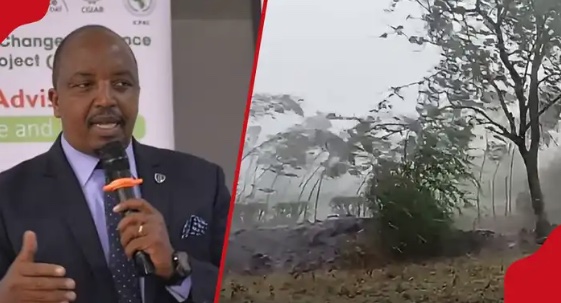
The Kenya Meteorological Department found itself at the centre of an online debate after posting a video capturing the intensity of a storm that swept through Kisumu East on the afternoon of October 8, 2026.
The footage showed trees being battered by powerful winds, their branches and leaves straining under the force, while heavy rain fell at speed across the area.
Rather than calming public nerves, the video appeared to do the opposite, triggering a wave of scepticism and frustration in the comments section.
Kenya Met’s Warning to the Public
Alongside the video, the department urged Kenyans to take the ongoing October–December rainfall season seriously, noting that global and regional weather patterns were pointing to strengthening El Niño conditions.
The agency reminded residents in vulnerable, low-lying areas to consider moving to higher ground.
The department issued a series of safety tips, advising the public to stay updated with official weather warnings, avoid sheltering under trees during thunderstorms, steer clear of flooded roads and waterways, and refrain from outdoor activities during heavy storms. Their message was straightforward: “Stay informed. Stay safe. Act early.”
The post came weeks after the department had formally announced the start of the OND rainy season, with warnings already extended to communities in flood-prone zones.
How Kenyans Reacted to Kenya Met Post*
Not everyone received the message in the spirit it was intended. Many commenters used the opportunity to raise broader concerns about the department’s methods and capabilities.
Kevin Shwamwamma wrote:
“Why can’t the Kenya Meteorological Department invest in modern equipment and hire qualified engineers and technicians to develop advanced weather-monitoring systems instead of relying so heavily on weather reports and videos? Kenya needs accurate, reliable and localised weather forecasts to support farmers, protect lives and prepare for natural disasters. It is time to invest in modern weather radars, automatic weather stations, satellite technology and AI-powered forecasting systems. We have the talent and potential to develop homegrown solutions rather than depending entirely on imported technology. Kenyans deserve accurate forecasts backed by modern science, innovation and accountability, not just predictions, but reliable information that makes a real difference in people’s lives.”
Kamau Ndunyo was more blunt:
“Hey, you forecasting aftermath, or you supposed to do before?”
Joseph Ayieko kept it simple:
“Don’t say heavy storm. Sema el niño.”
Boniface Maburi added:
“Mmeamua kuleta evidence.”
Cian Wuod Mwalimu was the most dismissive:
“Elnino yenu ilikuwa tu hii Upepo jameni? Bure kabisa.”
The responses reflect a public that is watching the skies closely but remains uncertain about just how much weight to place on the department’s forecasts as the season intensifies.