

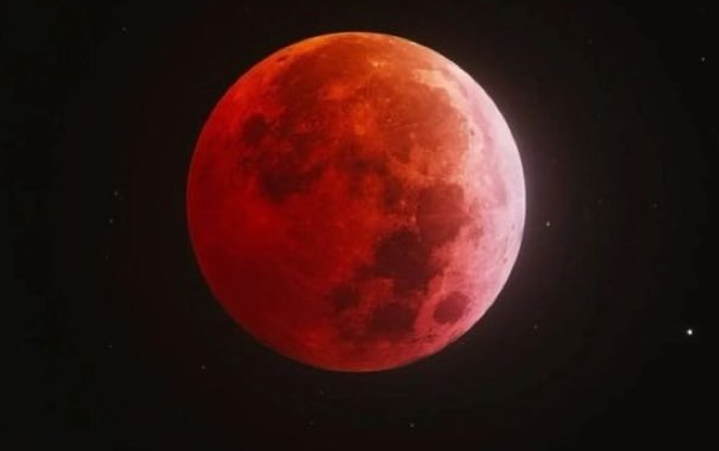
While skywatchers in Kenya will miss out on the dramatic “blood moon” of March 3, 2026, millions of people elsewhere across the globe will witness one of the most captivating astronomical events of the decade.
According to data from NASA and international astronomical observatories, the total lunar eclipse, during which the moon will take on a reddish hue as it passes through Earth’s shadow, will be visible primarily across parts of the Pacific region and surrounding continents. The event’s visibility is determined by whether the Moon is above the horizon at the time of totality, which in this case favours regions experiencing night-time during the eclipse.
“During a total lunar eclipse, the moon appears dark red or orange. This is because our planet blocks most of the Sun’s light from reaching the moon, and the light that does reach the lunar surface is filtered through a thick slice of Earth’s atmosphere. It’s as if all of the world’s sunrises and sunsets are projected onto the moon,” NASA stated.
Regions Where the 2026 Blood Moon Will Be Visible
1. Western North America
Large portions of western Canada, the western United States, and parts of Mexico will have clear views of the eclipse. In these regions, the moon will be high enough in the sky during totality to allow observers to witness the full red glow.
2. East Asia
Countries such as China, Japan and the Korean Peninsula are expected to experience the eclipse during nighttime hours, making the total phase clearly observable.
3. Australia
Most parts of Australia will have favourable viewing conditions, with the eclipse occurring during the evening or late-night hours.
4. New Zealand
Observers in New Zealand will also enjoy prime viewing conditions, with the total phase visible above the horizon.
5. Pacific Islands
Many island nations scattered across the Pacific Ocean will be well positioned to observe both partial and total phases of the eclipse.
Astronomers explain that during totality, sunlight bends around Earth’s atmosphere and filters onto the Moon’s surface. Shorter blue wavelengths scatter, while longer red wavelengths pass through, giving the moon its characteristic copper or crimson colour. This optical effect is what earns the phenomenon the popular name “blood moon.”
Meanwhile, Africa, most of Europe, and parts of the Middle East will largely miss the spectacle because the eclipse will occur when the moon is below the horizon or setting.