

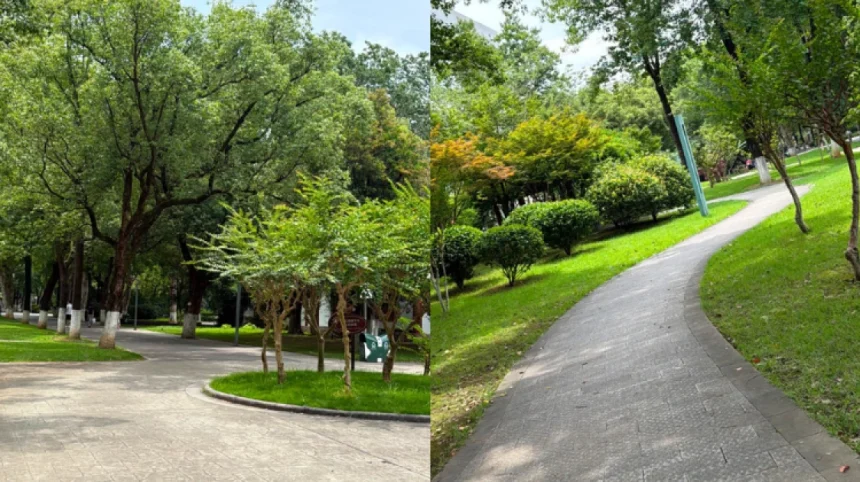
I visited Changsha and Beijing Cities and what left an unforgettable experience was the abundance of green spaces and accessibility of public parks.
Wherever you went, there were tree-lined streets, walking and cycling paths, well-maintained parks and open recreational spaces that were free and open to everyone.
They were vibrant community spaces where you could find children playing, people walking or exercising and friends catching up after work.
They were examples of how public infrastructure can improve both physical and mental well-being.
I remember going on walks at Hunan Martyrs Park in the evenings with my friends and no one bothered us, despite being tourists.
Above all, the lack of an entry fee may at times discourage people from visiting the parks.
Parks in Changsha and Beijing belong to everyone. This simple idea creates a sense of belonging for everyone.
As I walked through the parks, I noticed how they created a tranquil environment and cleaner air. Changsha was very hot, but walking around the city during the day was made bearable by the trees lined along the walking paths.
The green lawns and the colourful flowers added beauty to the landscape and somehow provided an escape from the fast pace of a densely populated city.
Kenya kept coming to mind. Our country is blessed with incredible natural beauty, from forests and mountains to wildlife and scenic landscapes.
However, accessible public green spaces have become harder to come by in many of our growing towns and cities.
Rapid development tends to disregard the significance of parks and recreational areas in favour of roads and buildings. We are cutting trees to build roads, clearing forests to build hotels.
We have an opportunity to learn from China’s approach to urban development and invest more in public parks and green spaces.
Green spaces will improve the quality of air with the rapid growth of industries, reduce urban heat and encourage physical activities such as running and walking for everyone.
The green spaces also provide a place for people to unwind and reconnect with nature. Investing in public parks should be considered an essential part of developing decent and healthy cities.
Another lesson worth borrowing is long-term planning; the parks I visited in China did not appear to be afterthought infrastructure squeezed into leftover land.
They were clearly part of broader urban development strategies that recognised the importance of balancing infrastructure with environmental sustainability.
As Kenya continues to expand its cities, preserving land for parks today will be far easier than trying to reclaim it decades from now.
This does not mean we should copy-paste what another country has done, as different countries have different ways of life, environments and cultures.
However, the basic idea is that cities should be planned with people in mind, not just vehicles and buildings, but also with public areas where people may walk, exercise, socialise, and just take in the scenery to improve their quality of life.
My experience in China reminded me that some of the most valuable investments governments can make are not always the tallest skyscrapers or the widest highways. Sometimes, they are the quiet parks where children laugh, people exercise together, and families spend time outdoors without spending money.
As Kenya continues to modernise, we must keep in mind that development is not just determined by economic expansion but also by how livable our cities are.
Increasing the number of free, accessible public parks would be a significant step toward creating stronger social relationships, healthier communities, and a greener future for future generations.
China showed me that sometimes the beauty of a city is not only found in its skyline but also in the green spaces where its people can breathe, relax, and belong.