
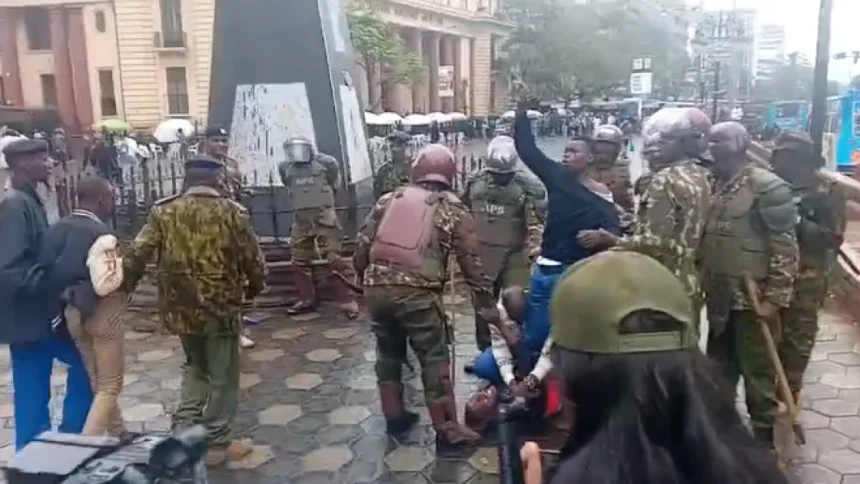
As of Tuesday morning, a handful of protesters were rounded up by anti-terror police outside the National Archives and were bundled into police vehicles.
Kenyans had dubbed the protests #RejectFuelPrices, vowing to pressure the government to lower fuel prices as well as address the skyrocketing cost of living.
Nairobi police boss Issa Mohamud had dismissed the protests, citing that the National Police Service (NPS) had not been notified of any planned procession.
The police chief clarified that the NPS does not oppose picketing but noted that officers must be given a 14-day notice for all planned protests and public gatherings.
“We are aware of planned protests next week regarding fuel prices, but no notification has been given. This makes the protests unlawful, and we will take appropriate action,” he stated.
The online uproar came after the Energy and Petroleum Regulatory Authority (EPRA) announced new fuel prices to take effect from April 15 to May 14. The prices were later revised on April 15, 2026.
This pushed retail prices to Ksh.197.60 for super petrol, Ksh.196.63 for diesel, and Ksh152.78 for kerosene.
EPRA explained that the changes reflected tax components and recent legislative amendments in the petroleum sector