

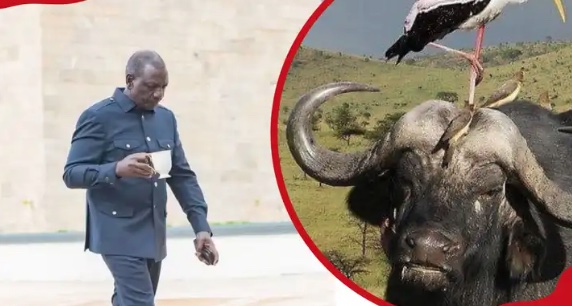
President William Ruto has ordered the importation of water buffaloes and improved camel breeds into Kenya, framing the move as a direct response to a milk shortage worsened by prolonged dry weather.
Speaking in Nairobi, Ruto addressed Agriculture Principal Secretary Jonathan Mueke by name, reminding him of an earlier agreement to act on both fronts. The president cited India as a reference point, noting that buffaloes are productive dairy animals in that country and that Kenya should explore the same potential.
“I had directed the Agriculture PS to help us bring in a better breed of camel and bring another buffalo breed. Buffaloes also produce a lot of milk. In India there are buffaloes,” Ruto said.
Camel milk prices signal untapped demand
One of Ruto’s central arguments for expanding camel milk production was the sharp price gap between camel and cow milk in urban markets.
“There is no problem in that. So PS Mueke, do as we had agreed. Bring in buffalo and also bring in a better breed of camel because we need to diversify our milk sources,” he added.
He pointed out that camel milk retails in Nairobi at between KSh 190 and KSh 200 per litre, roughly three times the price of cow’s milk, as an indicator of strong but underserved demand.
Formal milk deliveries to processors dropped from 84.4 million litres in June to 81.3 million litres in July, with dry weather reducing pasture availability and pushing up feed costs.
Fresh milk supply on supermarket shelves in urban centres has also been affected.
Kenya holds an estimated 4.6 million camels and is regarded as the world’s leading camel milk producer. Research conducted in Marsabit has shown that hybrid camel breeds can yield up to five times more milk than local varieties, with some first-generation hybrids producing more than six litres per day.
A camel milk processing line was commissioned at KCC Kiganjo in 2023, though value addition infrastructure remains limited.
Buffalo plan is still at early stage
The water buffalo proposal is at a more preliminary stage. Kenya currently has no domesticated water buffaloes, although the government gazetted the animal as a food animal in January 2025 and outlined a two-year pilot period for its controlled introduction.
Mueke has previously said the idea was inspired by Ruto’s visit to India in December 2024, where Kenya sought a dairy partnership, citing the buffalo’s lean meat, high-quality hides and relatively low maintenance requirements.
Kenya has an import and export protocol with Brazil for water buffaloes, but no actual importation has taken place.
Veterinary experts caution that bringing in live animals requires strict quarantine protocols, and environmental specialists have raised concerns about potential competition between water buffaloes and native wildlife for water and habitat.
Analysts say the success of both initiatives will depend on implementation timelines, farmer uptake and investment in cooling and processing infrastructure across the country.