

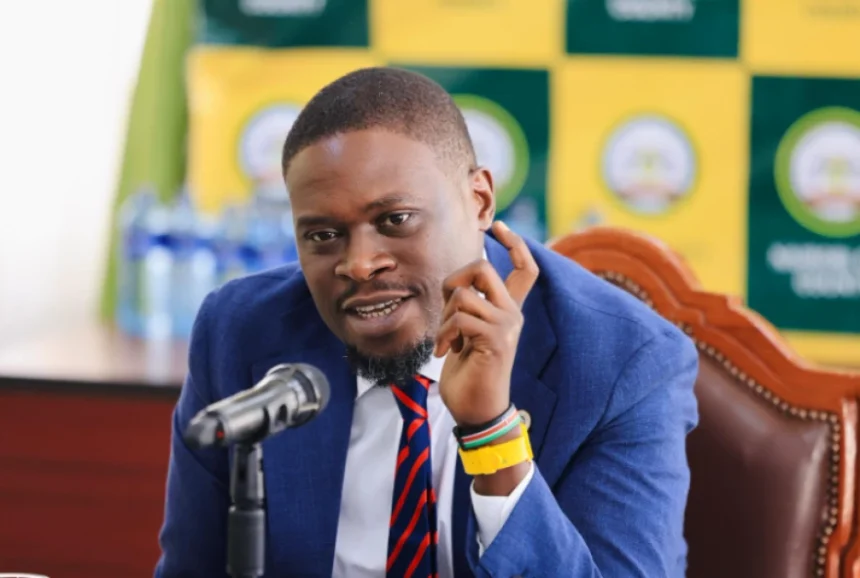
Speaking before the Senate Committee on National Security, Defence and Foreign Relations, Governor Sakaja unveiled details of the Nairobi Metropolitan Mass Rapid Transit System (NMRTS).
The ambitious project, estimated to cost nearly KSh.1 trillion (USD 7.78 billion), features a 30-kilometer underground metro line linking the Central Business District to Eastlands, Westlands, and Upper Hill.
Sakaja argued that moving commuters underground is the ultimate solution to chronic traffic congestion and would transform Nairobi into a “20-minute city”.
According to the county government, the underground CBD section will form the core of the project, easing congestion on surface roads while integrating rail services with pedestrian walkways, non-motorised transport and transit terminals.
The Eastlands line is expected to serve one of the city’s busiest commuter corridors and significantly cut travel times for thousands of daily passengers.
Governor Sakaja said the project marks the beginning of efforts to transform Nairobi’s public transport system and address the city’s long-standing traffic congestion.
If successful, Sakaja’s grand subway will be the first one in East, West and South Africa. The only countries with metros in Africa are Egypt and Algeria in the North.
However, the county boss’ announcement was met with skepticism and anger across social media and city streets, where Nairobians pointed to the city’s collapsing urban services.
Critics highlighted that every rainy season turns major arterial roads into impassable rivers due to clogged and inadequate drainage systems, while basic maintenance tasks remain unaddressed.
Nairobians online expressed outrage over the sheer contrast between the governor’s high-tech vision and the daily reality on the ground.
Many questioned how the county government expects to dig underground tunnels when simple surface potholes remain unfixed for months.
“This is just insane. Drivers routinely destroy their suspension systems on crater-filled roads along major roads across Nairobi. How can a city unable to manage rainwater be able to keep an underground subway from flooding? Fix what you can see first! And then you can dream later,” Robert Gachugu said on X.
Other Nairobians voiced frustration over widespread darkness across major residential estates and commercial zones due to dead streetlights, which they said has fueled insecurity.
“Sakaja should focus on essential duties such as unblocking storm drains, collecting garbage, and installing working streetlights before attempting engineering feats that rival London or Tokyo!” Esther Waigwe wrote.
On his part X user James Kamau said, “Our governor is talking about a $7.78 billion underground railway when garbage is piling up in Pipeline and drainage trenches are blocked with silt. Priorities are completely upside down. Fix the potholes on Jogoo Road and install working streetlights in Kilimani before dreaming of subterranean trains. Basic services first, Sakaja!”
During past rains, Sakaja attributed the flooding to outdated infrastructure and budget deficits, leaving many to question how City Hall intends to construct and maintain an underground railway network.
Mwangi Charles said: “City Hall claims they don’t have money to clear clogged drains or fix broken street lamps, but somehow there’s money for underground tunnels? The jokes write themselves in Nairobi.”
Urban planning observers have also questioned the feasibility and timing of the project.
While mass transit is essential for Nairobi’s growing population, experts caution that previous transit initiatives, such as the long-delayed Bus Rapid Transit (BRT) corridors, stalled despite significant initial investment.
Despite the fierce criticism, Governor Sakaja maintained that feasibility studies conducted in partnership with international development partners prove underground infrastructure is doable in the capital.
Nevertheless, for millions of Nairobians navigating flooded streets, dark alleyways, and damaged roads every evening, fixing the visible basics remains a far higher priority than diving into a trillion-shilling dream beneath the asphalt.