

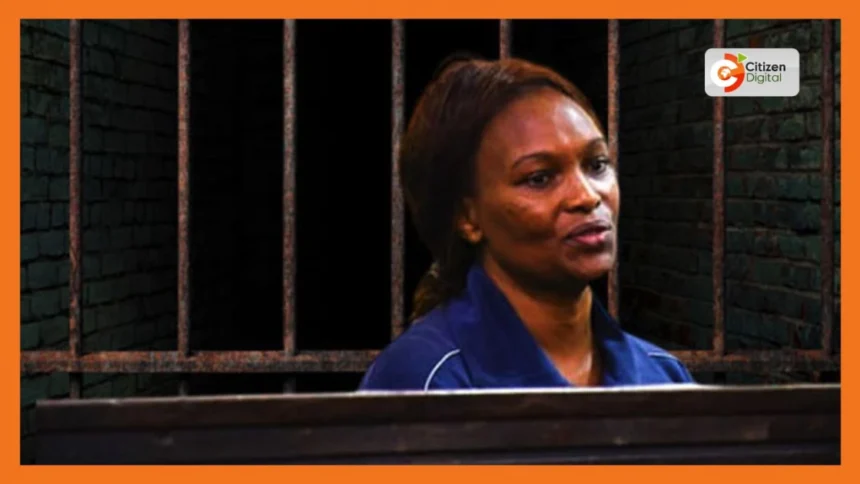
In a Notice of Motion filed before the High Court, Wairimu, who is charged with the murder of her late husband Tob Cohen, argues that the part-heard proceedings in Kibera High Court Criminal Case No. E001 of 2025 are fundamentally flawed and unconstitutional, and should therefore be nullified.
She is asking the court to certify the application as urgent and hear it on a priority basis. The accused further wants all rulings and orders issued so far in the matter vacated, and the trial recommenced afresh before a different judge, other than Justice Kavedza.
She also seeks directions that the court file be placed before the Presiding Judge of the Nairobi High Court Criminal Division for further action.
In her application, Wairimu alleges that the prosecution unlawfully uploaded a substantial portion of what it termed a committal bundle onto the court’s digital platform, an action she says is not recognised in law and amounts to an attempt to revive obsolete procedures. She argues that this conduct improperly exposed the trial court to evidentiary material it was not legally entitled to access, thereby undermining the court’s impartiality.
The accused also takes issue with court orders directing the availing of hard-copy documents together with an inventory at the request of the prosecution, stating that this amounted to prosecutorial impropriety and compromised the neutrality of the court.
Further, Wairimu contends that the trial court acted unlawfully by accepting and relying on documentary evidence that was never properly admitted under the Evidence Act. She cites a ruling delivered on 29th January 2025, where a report filed in another court was ordered to form part of the record without being marked as an exhibit, without calling the maker of the document, and without formal admission as evidence.
She also faults the court for ordering plea-taking before a medical assessment report was filed, describing the procedure as irregular, unfair, and contrary to established law.
According to the application, the prosecution improperly sought to have the case conducted through affidavit evidence instead of viva voce testimony, while the court allegedly failed to swear in witnesses and relied on unsworn evidence, contrary to Section 151 of the Criminal Procedure Code.
Wairimu further claims that she was compelled to give evidence by affidavit, exposing her to self-incrimination, and that the court denied parties the opportunity to cross-examine or re-examine witnesses.
The accused also criticises what she terms a casual mini-trial conducted by the court instead of a proper trial-within-a-trial, arguing that the procedure adopted where prosecution witnesses were called before and after her own testimony — was irregular and legally inexplicable.
She accuses the prosecution of referring to and producing witness statements from the bar before calling witnesses, and unlawfully relying on her entire statement in court, actions she says rendered the proceedings a mockery of the justice system.
Wairimu maintains that the cumulative effect of these actions amounts to a violation of her constitutional rights under Articles 20, 25, and 50 of the Constitution, and that allowing the trial to continue would be an abuse of the court process and a travesty of justice.
The High Court is expected to issue directions on the application.