

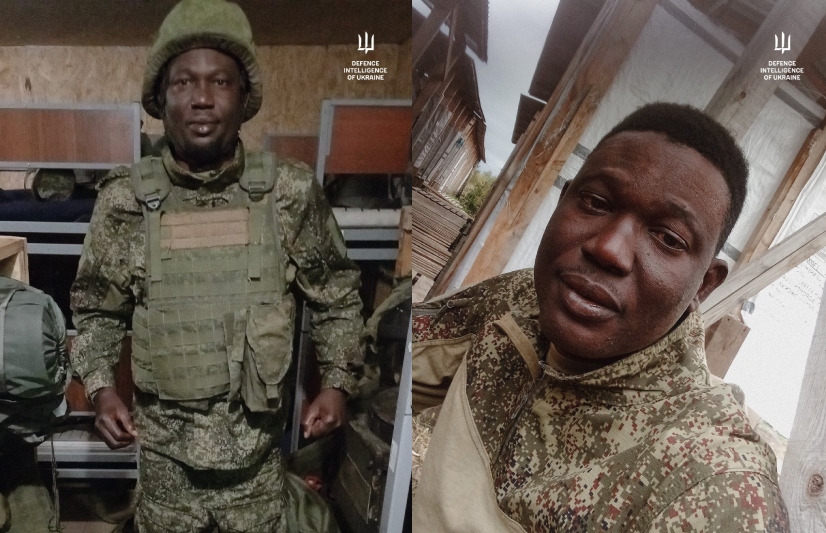
The brutal cost of Russia’s recruitment of African nationals has been laid bare in a series of grim developments in the battlefields of Eastern Ukraine, where foreign mercenaries are sent into ‘meat assaults’.
On Thursday, February 12, 2026, the Defence Intelligence of Ukraine (DIU) confirmed the recovery of the bodies of two Nigerian citizens, Hamzat Kazeen Kolawole and Mbah Stephen Udoka, who were killed by drone strikes in the Luhansk region.
deployment to the front lines.
Udoka, who signed a contract on September 28, 2025, is said to have received no training whatsoever and was sent to a combat unit just five days later.
According to the report: “Both Nigerians were killed in late November during an attempt to storm Ukrainian positions… they never engaged in a firefight, the mercenaries were eliminated by a drone strike.”
Burials without bodies
While the Nigerians were being identified in the mud of Luhansk, a sombre and haunting ritual took place in Mukurweini, Nyeri County.
The family of 31-year-old Charles Waithaka Wangari, a former footballer who died in combat on December 25, 2025, held a funeral without a body.
In a scene that has become a tragic symbol of the conflict’s toll on Kenya, relatives lit 31 candles, one for each year of his life, around a framed photograph placed where a casket should have been.
The family was forced to perform the rites over an empty, symbolic grave after being told his body was left on a battlefield after he stepped on a landmine, and could not be retrieved.
“We buried hope today, not a body,” a heartbroken family member said during the ceremony.
“This pain is unbearable. Not knowing where your child lies is torture.”
Waithaka’s story mirrors that of hundreds of other Kenyans who believed they were travelling for civilian work.
A trained National Youth Service (NYS) graduate, he was promised a job as a plant operator. Instead, he was coerced into signing Russian-language documents and sent to the front lines.
Meat grinder reality
In Kisii, the family of Clinton Nyapara Mogesa recently held a similar ceremony, lowering a hollow timber box into the earth.
Mogesa, 29, had sold his family land to fund a job in Qatar, only to be trafficked to the Russian front.
Ukrainian intelligence describes these recruits as being used in meat assaults – high-casualty infantry waves designed to exhaust ammunition.
Ukraine’s DIU issued a stark warning to the continent: “A trip to Russia is a real risk of being forced into a ‘suicide’ assault unit and, ultimately, rotting in Ukrainian soil.”
At least 7 Kenyans were specifically reported as missing by their families as of February 9, 2026. Other accounts from survivors suggest the true number of those who have “gone offline” after reaching the front lines may be much higher.
The Ministry of Foreign and Diaspora Affairs estimates that over 200 Kenyans have been recruited into the Russian military since 2022. Some family and survivor accounts suggest this figure is an underestimate, potentially exceeding 500.
Recent recoveries have identified several victims, including Ombwori Denis Bagaka, Wahome Simon Gititu, and Clinton Nyapara Mogesa, whose bodies were found near Lyman in the Donetsk region on February 6, 2026.
As of February 11, 2026, the government has successfully rescued and repatriated 27 Kenyans.
At least 4 Kenyans are confirmed to be held in a prisoner-of-war camp in Kyiv, with negotiations for their release currently underway.
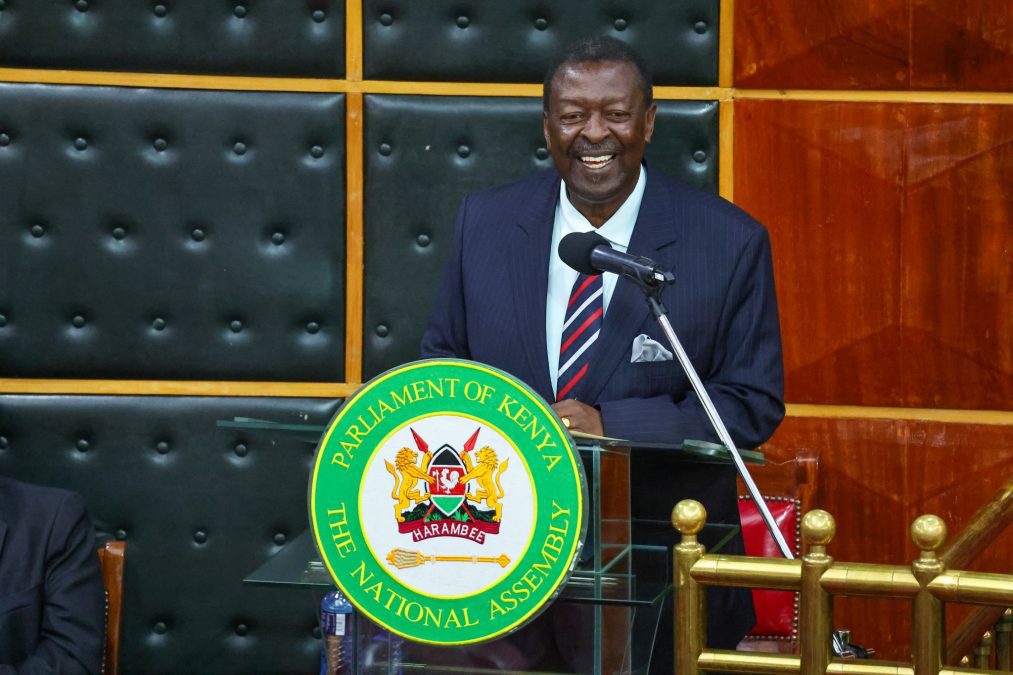
Prime Cabinet Secretary Musalia Mudavadi is scheduled to visit Moscow in March 2026 to verify the status of those said to be trapped in hospitals and to negotiate for those in captivity.
Even as Mudavadi prepares for a high-stakes mission to Moscow, the pressure is mounting on the Kenyan government to crack down on the shadowy recruitment pipeline that continues to trade young lives for foreign silver.
For the families in Nyeri and Kisii, the mission comes too late to bring home anything but memories.