

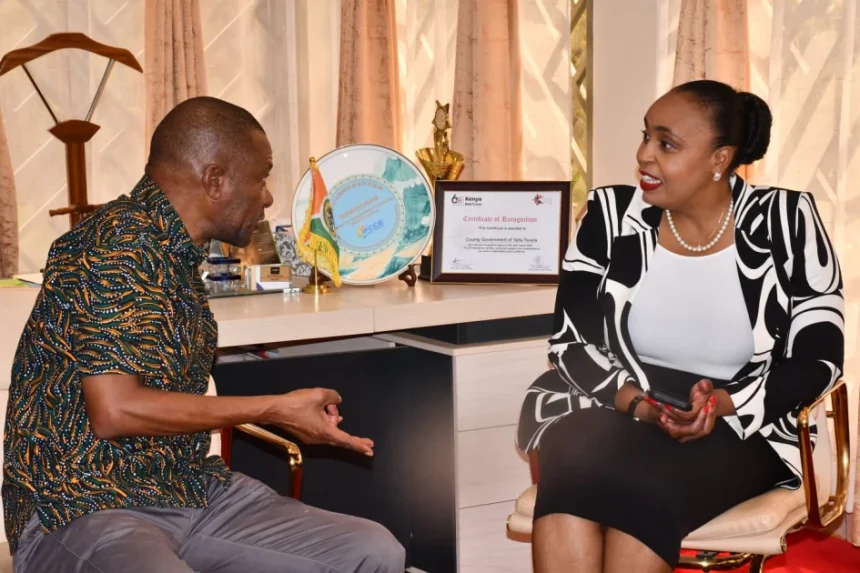
This follows a high-level meeting held on April 30, 2026, between Dr Caroline Karugu, Principal Secretary for East African Community Affairs, and Taita Taveta Governor Dr Andrew Mwadime at the county headquarters.
Dr Karugu said the courtesy call was aimed at advancing collaborative solutions to persistent trade bottlenecks affecting the smooth flow of goods along the vital transport route linking Kenya to Tanzania through the Taveta–Holili Border Post.
She underscored the economic significance of the corridor, revealing that Taita Taveta County handles an average of 130 inbound and 90 outbound trucks ежедневно through the Taveta–Holili crossing point. The movement generates approximately KSh 383 million in annual revenue, making the region a critical node in Kenya’s trade network.
“The significant national contribution by Taita Taveta County highlights the urgent need for stronger intergovernmental collaboration to eliminate trade barriers and unlock the full potential of this regional corridor,” Dr Karugu said.
The Mombasa–Taveta/Holili corridor serves as a key trade artery connecting the Port of Mombasa to northern Tanzania and the wider East African region. However, stakeholders have long raised concerns over non-tariff barriers such as multiple roadblocks, inconsistent county levies, and regulatory misalignment, which slow down transit and increase the cost of doing business.
Governor Mwadime welcomed the national government’s intervention, emphasising the county’s commitment to aligning its policies with regional and national frameworks to enhance trade efficiency.
The discussions also focused on harmonising county regulations with the EAC Treaty and the Constitution, as well as removing unnecessary fees and streamlining processes at border points.
The renewed push comes amid Kenya’s ongoing efforts to position itself as a regional logistics hub while maximizing the benefits of the EAC Common Market by facilitating the free movement of goods, services, and people.